

Corners of reality and sharp edges of existence
Lost and expanding in the corners of our world

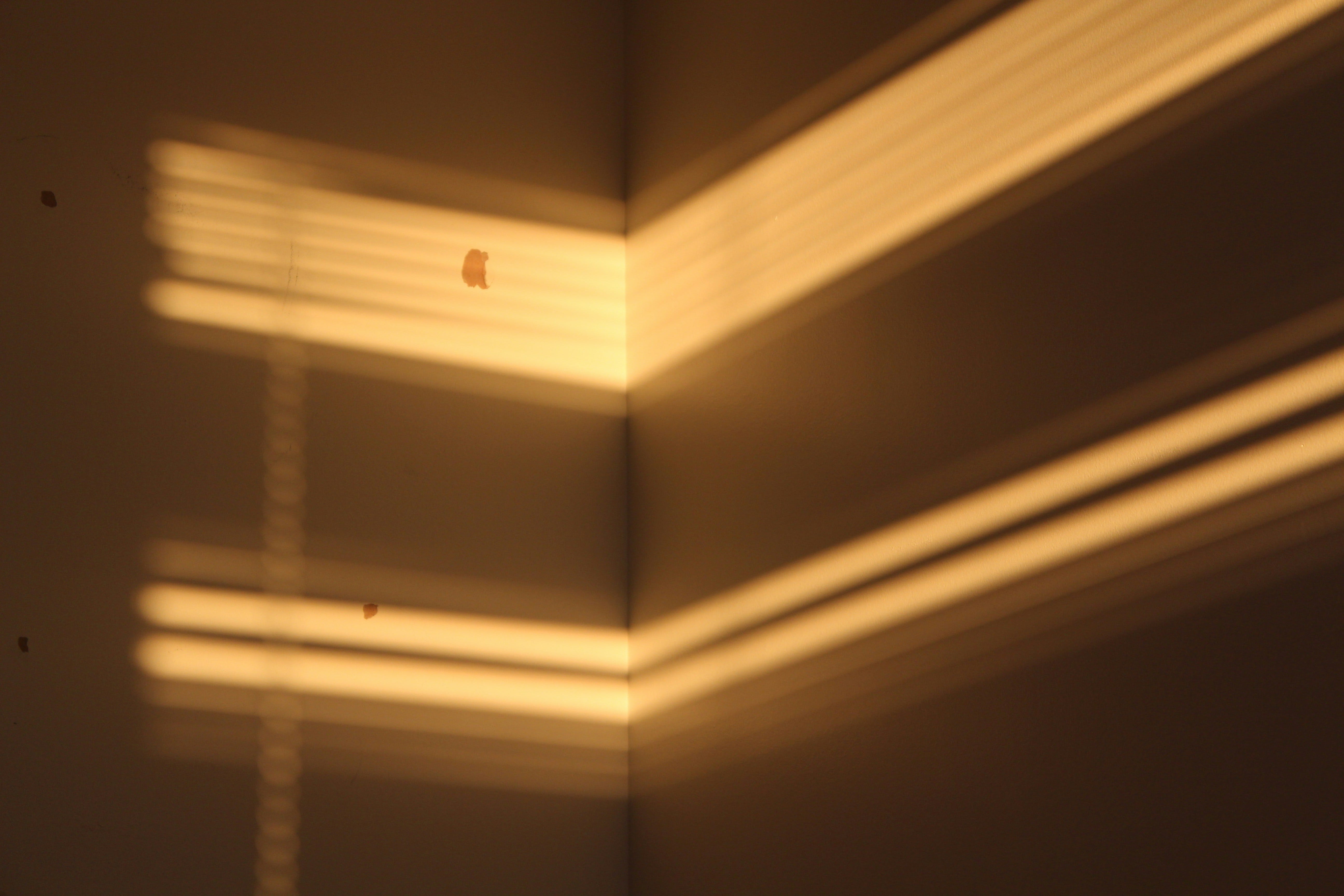
I read with a pencil. But when I am caught without one, I fold down the corners of pages I want to return to, ideas I want to revisit, quotes that strike me with intensity. What of this little corner–this imprint I have made upon someone else’s voice, the space I have negated in order to open space, the deformity made upon a text from the outside in? I could mistake myself for being the actor upon those corners, but, in the words of Carl Sagan:
“Think of the endless cruelties visited by the inhabitants of one corner of this pixel on the scarcely distinguishable inhabitants of some other corner, how frequent their misunderstandings, how eager they are to kill one another, how fervent their hatreds. Think of the rivers of blood spilled by all those generals and emperors so that, in glory and triumph, they could become the momentary masters of a fraction of a dot.
Our posturings, our imagined self-importance, the delusion that we have some privileged position in the Universe, are challenged by this point of pale light. Our planet is a lonely speck in the great enveloping cosmic dark. In our obscurity, in all this vastness, there is no hint that help will come from elsewhere to save us from ourselves.”
From our corner of the universe, from our corner of the world, from the corners of our eyes, we see sideways, the periphery of things though others place a heavy weight upon the veracity of our witnessed testimony. They forget our stresses, our distractibility, our weakness to being led astray, our memory itself as just a corner puzzle piece combining with fear, influence, false information, or pressure to create an image we swear is ours alone. Memories too have corners, and their edges can cut us.
Our lips have corners. They turn up or perhaps down, slipping and sliding, betraying the corners of our heart we intend to keep hidden.
What is just around the corner? Do we believe it’s “a paradise where human beings would be free and equal” (George Orwell, 1984)? Is it a gorgeous abstraction like destiny or love?
"Falling in love, we said; I fell for him. We were falling women. We believed in it, this downward motion: so lovely, like flying, and yet at the same time so dire, so extreme, so unlikely. God is love, they once said, but we reversed that, and love, like heaven, was always just around the corner. The more difficult it was to love the particular man beside us, the more we believed in Love, abstract and total. We were waiting, always, for the incarnation. That word, made flesh.” (Margaret Atwood, The Handmaid’s Tale)
Is it the home we, as strangers, always long for?
“We are all strangers in a strange land, longing for home, but not quite knowing what or where home is. We glimpse it sometimes in our dreams, or as we turn a corner, and suddenly there is a strange, sweet familiarity that vanishes almost as soon as it comes”? (Madeleine L'Engle, The Rock That Is Higher: Story as Truth)
Or is it death, always waiting, always lurking, always just there in front of our next turn?
What do we see in corners? Or shy away from? Evil? Its dimness? Spiders? Or maybe the loneliness that
"creeps on you, quiet and still, sits by your side in the dark, strokes by your hair as you sleep. It wraps itself around your bones, squeezing so tight you almost can't breathe. It leaves lies in your heart, lies next to you at night, leaches the light out of every corner. -Tahereh Mafi, Unravel Me (Shatter Me, #2)
Is it just dirt in the corner? Maybe dirt that can implausibly be the muse for timeless artwork…
Though I am often in the depths of misery, there is still calmness, pure harmony and music inside me. I see paintings or drawings in the poorest cottages, in the dirtiest corners. And my mind is driven towards these things with an irresistible momentum."
— Vincent van Gogh
Or is it the corner, so close to our mundane lives, where those attempting to fly fall violently to the ground unnoticed?
About suffering they were never wrong,
The Old Masters: how well they understood
Its human position; how it takes place
While someone else is eating or opening a window or just walking dully along
How, when the aged are reverently, passionately waiting
For the miraculous birth, there always must be
Children who did not specially want it to happen, skating
On a pond at the edge of the wood:
They never forgot
That even the dreadful martyrdom must run its course
Anyhow in a corner, some untidy spot
Where the dogs go on with their doggy life and the torturer's horse
Scratches its innocent behind on a tree.
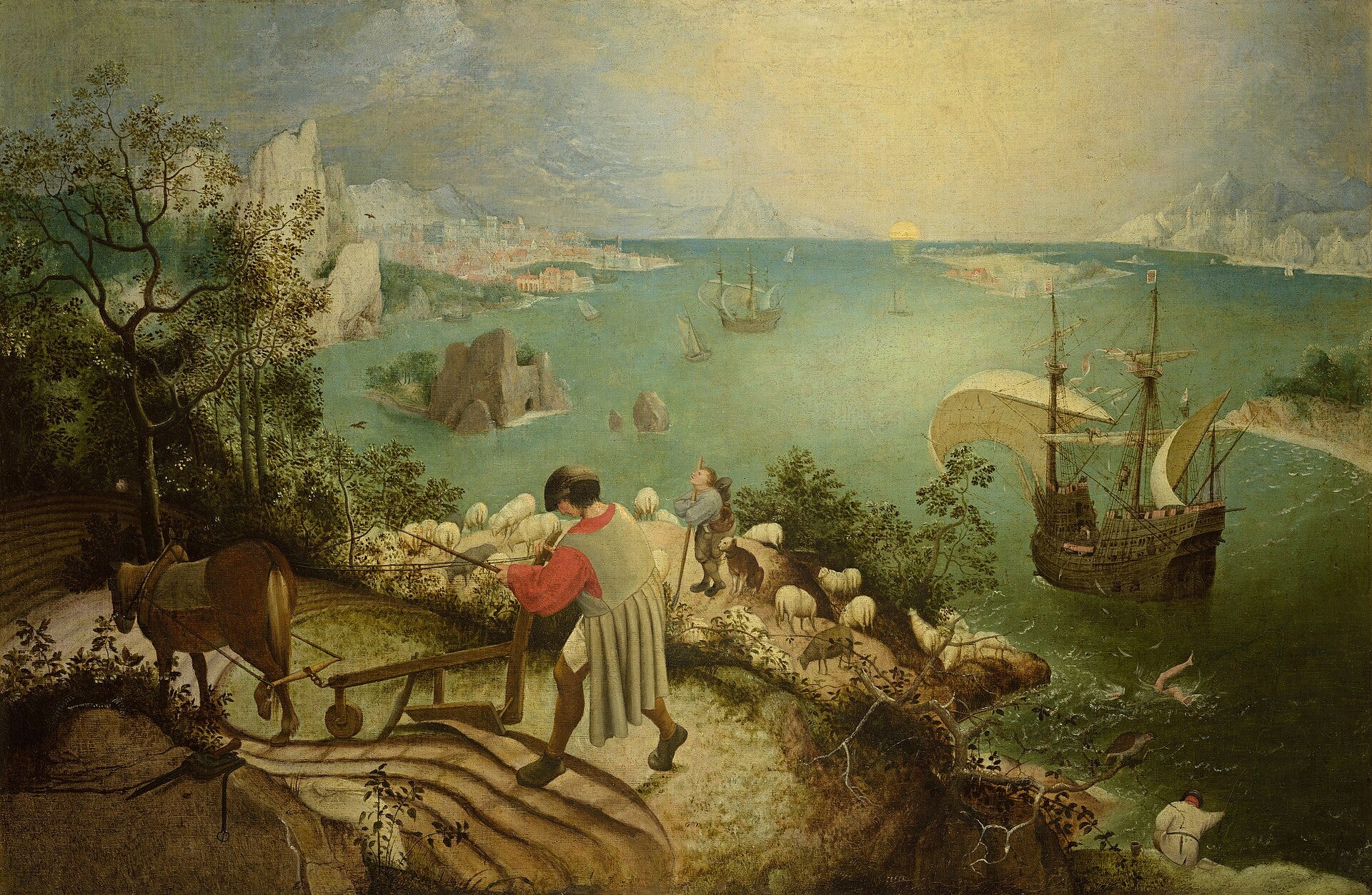
In Brueghel's Icarus, for instance: how everything turns away
Quite leisurely from the disaster; the ploughman may
Have heard the splash, the forsaken cry,
But for him it was not an important failure; the sun shone
As it had to on the white legs disappearing into the green
Water; and the expensive delicate ship that must have seen
Something amazing, a boy falling out of the sky,
Had somewhere to get to and sailed calmly on.
(Musée des Beaux Arts by W. H. Auden)
Corners can be as fatal as they are opportunistic. A corner can force us into the most horrible decisions–do we stay and burn or jump to our deaths? Inevitably, there will come a time for each of us to be The Falling Man when the corners of our very buildings are no longer solid as they once appeared to be.
Corners can be faraway too. They can hide us as much as trap us. They can even be where the most important call arises:
The bell and the blackbird is an old meme in the Irish tradition. It’s the image of a monk, standing on the edge of the monastic precinct in the old Celtic Christian days, hearing the sound of a bell calling him to prayer. And he says to himself, “That’s the most beautiful sound in the world.”
But in the old Irish imagination, nothing is ever singular or simple, and at the same time, he hears the blackbird calling from outside of the monastic precinct. And he says to himself, “That’s also the most beautiful sound in the world.” And you’re left contemplating the man standing there, and you’re not told which way he goes, because, of course, in the real conversation of life, we have no choice. We are both called to a deeper sense and context of ourselves, and we’re asked to actually meet life as we find it. There’s always the great question, “Should I actually go deeper, to a deeper context, a deeper understanding of myself and the whole situation before I actually hurl myself at reality? Or should I do something now?” Of course, as real human beings in real human communities and families and relationships, we do not get to choose between the two. We always have to deepen, and we always have to be present in the world at the same time. So this is about holding that conversation. It’s really a little touchstone of the ultimate state that we’re all trying to attain. “The Bell and the Blackbird.”
“The sound / of a bell / still reverberating, // or a blackbird / calling / from a corner / of the / field. // Asking you / to wake / into this life / or inviting you / deeper / into one that waits. // Either way / takes courage, / either way wants you / to walk / to the place / where you find / you already know / you’ll have to give / every last thing / away. // The approach / that is also / the meeting itself, / without any / meeting / at all. // That radiance / you have always / carried with you / as you walk / both alone / and completely / accompanied / in friendship / by every corner / of the world / crying / Allelujah.”
The ultimate conversation, where we overhear our own voices in the voice of a stranger. It’s interesting to think that we almost always meet the new self in the form of a stranger. And yet, we live in a time of deep suspicion of strangers. And yet, the new you looking back at you out of the mirror is always first perceived as a stranger and always turned away from. The first beckoning horizon in our life is always seen as one that will lead us to a place of nourishment and pilgrimage and that will frighten us to death at the same time. So the invitation by life is always to be more generous than you thought you could be. (On Being, David Whyte)
Thoreau went to the woods because he wanted to “live deliberately,” yes, but less remembered because he also wanted to “to drive life into a corner, and reduce it to its lowest terms.” Can you “front only the essential facts of life” when you are attempting to be at its helm, to be the broom that sweeps all that is not marrow away? Dostoevsky, on the other hand, attacked this sort of reductionism in his novella, Notes from the Underground in which the narrator, “neither a scoundrel nor an honest man; neither a hero nor an insect,” finds himself in his old age “eking out my days in my corner, taunting myself with the bitter and entirely useless consolation that an intelligent man cannot seriously become anything, that only a fool can become something.”
What of the physical urban corners that arise organically, unplanned and yet essential as were Jane Jacob’s street corners which, at the time when she published The Death and Life of Great American Cities in the 1960s, “most urban-planning rhetoric of the time condemned as obsolete and slummy, something to be replaced by large-scale apartment blocks with balconies and inner-courtyard parks,” as Adam Gopnik observed in a New Yorker article in 2016. The corner–where buildings and people meet–matters as density produces diversity and vice versa. But what of those who linger, hoping, waiting to meet on the corner and who are vilified, even criminalized for loitering? Can the idealized civic space of meeting be a racist one? Thus, Jane Jacob’s “eyes on the street” become dark, looking not for danger but for the perception of danger. She didn’t plan for the affordability crisis nor address the freedom of movement necessarily restricted to too many.
Other corners paint us in, not axiomatically in the negative–the poet’s corner, the editor’s corner, the community corner–these cozy ideals of abstract space where like-mindedness meets to expand beyond like-mindedness. At these corner tables, knees knocking each other’s beneath the table, we ponder existential wonders or imperfect ideals. The corner becomes intimate, just dark enough for ideas to flow from people’s mouths without inhibition, the music playing just loud enough to dizzy our senses and steel our nerves enough to lean forward for a kiss.
The corner can look forward or be a place of nostalgia. As Robert Frost commemorates in his poem, New Hampshire, about a state he claimed to retain much of the good that the ills of commercialization had ousted elsewhere:
New Hampshire raises the Connecticut
In a trout hatchery near Canada,
But soon divides the river with Vermont.
Both are delightful states for their absurdly
Small towns—Lost Nation, Bungey, Muddy Boo,
Poplin, Still Corners (so called not because
The place is silent all day long, nor yet
Because it boasts a whisky still—because
It set out once to be a city and still
Is only corners, crossroads in a wood).
To be only corners, to be still corners in a world of highways and cornering the market. And so a British/American band found it fitting for their name–Still Corners–and their songs seem awash in nostalgia. Of course it may be only an idea. Even Frost admits he lives in Vermont.
But away! To the corners of the earth! The terms figurative usage occurs several times in The Bible including in Revelation 7:1 where John envisions angels standing at each of the four corners of the earth, holding back the wind or the wrath of God will be upon all. Or in Psalm 118 where the important corner is not of the earth but the stone rejected by those building the future who do not recognize it will become the cornerstone nonetheless. Let Bob Marley enlighten us.
If only we could square the circle, make the unimaginable seem explicable, clean away the pain, horror, and confusion of the world by fitting it into logical geometry. If only we could bring together these two things which are too different to exist coincidentally, which push against each other like opposing magnets, which force open the solution to a problem to maintain the problematic. But you know him–he that has squared the circle, he that has made the inconceivable business decision and succeeded, he that has made it all look like child’s play, he that has pulled the loose and knotty string into the neatness of the cat’s cradle and holds it up for all to witness. But if that makes the square possible and the circle its impossibility, then what of the corners? What of the conditions of the possible? If we cut corners, do we end up back at the impossible again?
I admit it. I’ve hidden in the corner, cowered there hoping I could become one with the wall or the floor or the dirt. I, like you, have been painted there, our perceived identities blackened against the wall as–like Plato’s cave–the shadows become more real and more seen than the complexity that throws up their shade. Matthew Brensilver talks about how our emotions, most notably our anger, can become our “karmic corner,” pushing us into a position with our face to the wall so that all seems blockage and dead end and “and we're gonna suffer, we're gonna cause suffering. There's no dukkha free way out, it's just that way. But we consciously experience the pain of that so that we consolidate our motivation to practice in the future, to be careful, to develop deeper reverence for love so that the next time when I say to myself, this cannot work out, this anger cannot work out, I believe it a little bit more deeply.”
Time can open the road, the road always stretching out in front, the road and the corners only imaginings in our future-oriented concern. Or in our grief for the past, for the corners we didn’t or couldn’t turn, the ones that bring us to our knees for there is no map backwards to find them and maybe we should “go back to being lonely and confused” anyway as George Michael once sang. But I think, instead, I will be here “standing on this corner / Where there used to be a street,” meditating with the peerless lyricist Leonard Cohen, on the weight: for…
I know the burden's heavy
As you wheel it through the night
Some people say it's empty
But that don't mean it's light
From my corner to yours, from the light to dark and back around the corner,
Katie