

But soft!
How to Get Unstuck from a Rock, Navigate Being Stranded on the North French, and Find the Softest Smell

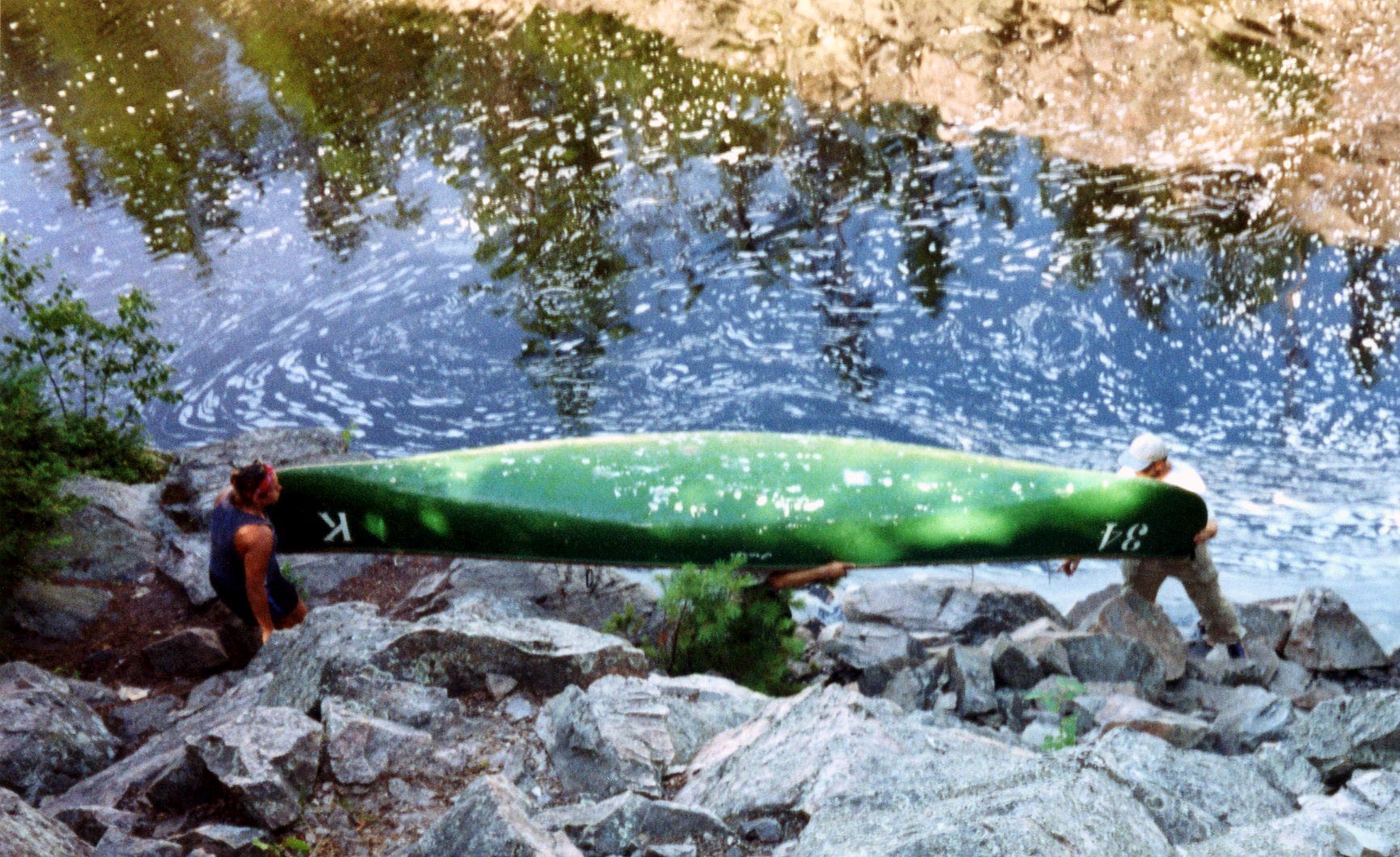
My favorite aunt and uncle were visiting a few weeks back and I was picking their brains about planning long canoe trips. They are masters of the 2–3-week backwoods Canadian canoe trip. I have been on several with them, and they remain some of the most formative experiences of my life. Because of a canoe trip’s power to stun, bore, test, overwhelm, frighten, and just fill you up, I wanted to learn as much as possible so that I could plan such a trip with my own three kids.
The conversation, though, quickly turned from how-to-plan towards reminiscing about the most memorable trips they had taken–the trips where, at the time, they weren’t sure how things would turn out. Memories of genuine vulnerability, you could say.
One such trip was one they had taken up the North French in Ontario, Canada–a two-week long expedition wherein their intention had been to travel through the Canadian Shield to where the river joins with several others to form the Moose River, ultimately terminating in James Bay at Moosonee.
If you search for the North French online, you will find a page from the Wildlands League about the Moose Cree committing to protecting this watershed, a wikipedia entry, and a trip journal submitted in 2018 on the website Canadian Canoe Routes, but not much else. In the trip journal, Bob Olajos mentions only three reported trips up the river prior to his first trip in 2016. He describes the river as “a remote, serious whitewater river with many very difficult rapids. In the 47 km middle section, it drops 475 feet, an average of over 10 feet per kilometre. In some sections, it is twice as steep. There are no portages around most of the rapids and no signs on the few portages that do exist. There are no formal campsites. Other than the fishing camps along the headwaters lakes, there are no places for float planes to fly to the rescue. There are no roads past the put-in. This route should be attempted by expert whitewater canoe trippers only. If you want to paddle the North French, you must be comfortable deciding for yourself when to run a rapid, when to line or wade, and when to portage. You must be prepared not only for difficult whitewater, but also a difficult environment. Expect any kind of weather, including torrential rains, punishing headwinds, as well as snow and freezing temperatures, even in mid-summer. My notes are guidelines only. They reflect what we did, not necessarily what you should do. You are responsible for your own safety.”
My aunt and uncle had taken their three young girls up the North French in the summer of 1997. Of the three earlier trips he mentions, my aunt and uncle’s is not one. I have traveled with them through the toughest of situations and I can say that their judgment of and their experience to handle rivers such as this was indeed sound. But you cannot account for weather and the variations in water flows from one summer to the next. And, at that time in the late 1990s, there was only so much you could know about a remote river in Canada before you found yourself a week into the trip stuck on an island around which the river rushed much faster and stronger than you had anticipated, and where–after several scouting trips upriver–you decide that the ensuing rapids are too dangerous to submit your family to. In any case, you find yourself waiting day after day for the water to recede enough for safer passing.
What to do as you wait day after day for the river flow to lessen? Rest, cook and eat your dwindling food supply, read, swim, and play one of the few games possible with no balls, cards, or equipment. Two of my cousins had settled on hide-and-seek. Now, as my uncle describes it, the island was no larger in diameter than your typical suburban kitchen which is to say there weren’t many options for the hider. However, clever girl that she is, my cousin found a hollowed-out rock formation on one side of the tiny island and shimmied herself as deep into it as she could go.
Even with such an ingenious spot, she was quickly found but–whether because of muscle cramping from the physical contortions required to fit in the space or from sheer fear at the situation in which she had deposited herself–she tightened up, conforming even more closely to the rock’s weathered shape. Seamlessly, in fact.
Even in the retelling, my aunt’s face rippled with alarm. My aunt is one of those people who is utterly unflappable. No matter if her two young daughters have flipped their canoe in the middle of a class III rapid or if her husband is attempting to portage a canoe through an impassable narrowing of rock at the top of a steep, slick, boulder-filled descent aptly called Dead Man’s Portage, I have never seen her flinch. Yet, as they told me this story, over two decades later, she said “I had to walk to the other side of the island to calm down.” I can only imagine the sheer panic that your child stuck in a rock would cause, on top of your family being marooned on an island with food running out, unsure if you can continue to your expected destination, with no way to alert anyone as to your plight.
The story pretty much ended there. Obviously, my cousin got out. She is happily married now with her first child on the way. And the family was accidentally discovered by a search and rescue helicopter ordered by the local sheriff on account of a missing older man said to be somewhere in the area. But I thought about this anecdote as I began to research vulnerability. As with all things, the paradoxical abounds, but perhaps more so with vulnerability than with other states of being. We rightly think of being soft as a place of vulnerability–just think of any mollusk sans shell. But sometimes, hardening gets you stuck. Sometimes soft is the solution. As I thought about soft, I recalled a blog post I wrote a while back about the softest smell which I include here. In it, I found hints of vulnerability for you to consider. I am simultaneously working on the curated resources for vulnerability and a more directly related post on the topic which should come out in a few days.
I found an interesting journal prompt for you to consider. It reminds me of my absolute favorite Shakespearean expression, “But soft!”… an expression which implies the tenderness of waiting… an expression I hope to revive. Anyway, here is a place for you to begin your work week:
What smells the softest?
1. First breath upon waking
One of my favorite experiences in life — one of the best simple moments — are the first few moments upon waking in the morning. I am one of those unusual people who doesn’t use an alarm clock. For the most part I would mark my restless, fitful, light-sleeping nature as a negative. However, in this one particular aspect, I can see how lucky I am. How many of us are able to truly enjoy those moments when you re-open your eyes naturally, drawn somehow back out of slumber and dreams and the unconscious, and therein you hover in somnolence, in liminal almost and not quite, in-between the in and out of your own life, your own self. You lie and yet think no thoughts. You look and yet see nothing at all. Or rather you see and don’t process. You see purely and disconnectedly. You don’t breathe… for a long time… for an eternity. The little quiet moments that exist in the still of your own dawn expand into a thousand lifetimes. They break over and over you like waves and you are unable to move, helplessly held captive in the vulnerability of breathlessness. You absorb and integrate; you die slowly and let the dead parts of yourself fall away into the pink blush of sky that evaporates outside your bedroom. And then finally you do breathe. And the breath does not feel like anything — it is too light, too gossamer, too delicate. It only smells of soft as it enters your nostrils and brings you malleableness once again.
2. Your neck and the place where your forearm meets your upper arm
You already smell the softest because I love you. But there are still softest soft-smelling parts of you. Your neck. My head resting on your shoulder. The way your neck curves around and cradles my head smells of softest tenderness. On a long drive, I reach over and caress your neck when you begin to appear tired. Smooth, warm skin spreading over strong tendons. My long piano fingers smell the softness of your gentle heart through the touch upon your sweet-whispering, clemency-misty, dulcet soft soft neck.
And then there is that space within your arm. Soft-smelling when I reach out for you, for the rugged strength that you embody and evince, for the you that dares to protect me… and find this tiny little spot. The softest smell of your vulnerability. Not a vulnerability that is weak, but one that is carefully hidden… only to be opened to those who earn that trust, only to be revealed from the inside out, only to be known by its softest smell…. only to be smelled by those who begin and begin and begin with you in the soft pacific melody of eternal new beginnings.
3. Spring mud
First walk outside in months. Snow remains in patches, its frigid tenacity releasing a sweep of hard, cold winter as I pass. But winter is escapable now. It can only hold on in fragmented shadows, gripping the ground in desperation. Spring opens like hands, like the warm breath that speaks words never heard before but felt, like the softest smell. My feet move with new-found freedom in the softest slightly perspiring air, the ground dancing with me as it yields to my every step. The woods are open and light. They ask to be entered. They speak through a chorus of downy buds and muted pastels. They sound and re-sound with the echoes of winged memories, of time that has been safely buried and now oozes back out of winter chambers as dark, rich, mineral-replete mud. I sink in. I am buoyed up. I kick up mud on my bare legs. I move through the dewy ancient woods, through the untouched moments ahead, softest smell enveloping me.
4. Your voice on the Rialto
“…not mysterious… only unfathomable; not concealed, but incomprehensible; it is a clear infinity, the darkness of the pure unsearchable sea.” (Ruskin, Modern Painters)
It had been months since I had seen your face. It had been months in which I had awoken over and over in a foreign country, in a foreign where and how, in a foreign me. Your voice on the phone, when I so rarely was able to make the long-distance call, crackled with static and insurmountable distance. You became an abstraction, a memory only made real when I spoke aloud of you to my host parents… and then you were still trapped in the nasal noises, the back-of-throat rolling r’s, the missing liaisons when last letters dropped mutely off of the end of words. You fell flatly to the ground, always apart in your two-dimensional space, always painfully present in the chambers of my heart as a remembered potential.
But it was today. Today was the day when I would see you for the first time again, when a daughter would be reunited with her father in the shifting, watery Venetian light, in a city hovering in its own natatory existence, echoing a million legends on its uneven stone streets, through its maze of canals, against the glow of medieval facades. All is reflection. Everything dissolves and reappears. And yet you will be real. And I walk with exquisite speed, propelled by the you that once held me for hours in the depths of night… both of us fragile, both of us scared and yet reassured by each other. And then I hear your calming, paternal resonance: “Ciao bellissima!” and the unfathomable becomes a ‘clear infinity’ and somehow space collapses and I am in your arms again… softest smell.
5. The letter you wrote me
I first read it on a plane. High above my own life and earthliness, I read your words and your voice spoke them into my soul. You enclosed one of your own original poems. You were so many decades apart from me, so many experiences wiser. I was a vernal ray of sunshine, just alighting upon the branches of life. Yet, you saw me. You noticed how I listened when you and the other adults spoke, long hours spent at the breakfast table, coffee mugs refilled, the air and my cousins getting restless with the day, dishes sitting soapily in the sink awaiting and abiding. You noticed how carefully I practiced my lines for the school play, as if the performance was to be seen by millions. You read my own stories and poems. You took them seriously. You saw the me I could become in the me that was reaching. You took the hand of both mes and placed them in your palm as you wrote me a letter.
I find it again now, tucked into a book. A book that was too old and complicated for a ten-year-old to be reading. Your words speak with the same faith, the same inspiration, the same graceful sentiment. “You are a writer.” It was always so simple. And yet it was a gift of trust and belief that you gave to me. There has been so much of which I have been unsure. There is so much I do not understand. Yet the title you bestowed upon me has been the only constant. It was there in potential. I never would have trusted it so completely without you. And now the words speak from inside of me where you exist, where you traveled after you died. I feel you more perhaps. Your voice slips into your cautious smile into your delicate hands into my own hands as I hold your letter and bring it close to my face. It speaks volumes; it bristles with thick pulpiness and pen marks blurred only slightly by time and poignancy. I close my eyes… softest smell.
From your fellow thought explorer and eternal seeker,
Katie