

Embracing Vulnerability Is Stupid
Discerning When to Open to Risk Is Not

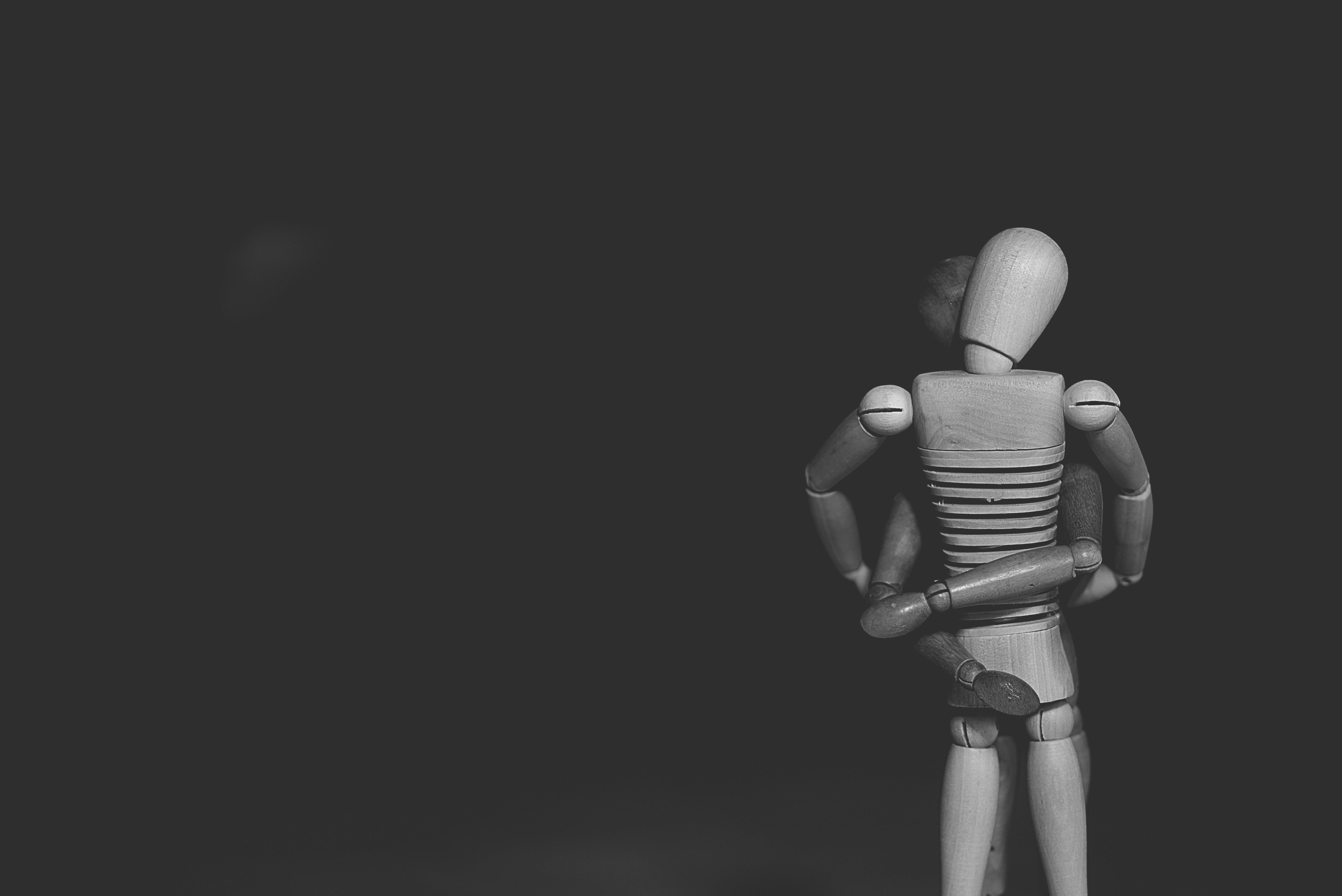
It sometimes amazes me that, as we slip and slide over a rock spinning and careening through space, we ever think there is something to hold on to. Or, to put this paradox in the language of physicists: matter is just energy that has reached a frequency we can sense.
But hold on we do–with our modern afflictions of perfectionism, efficiency-mind, and emotions-are-to-be-controlled-unless-they-are-anger-ism. We have painted ourselves into such a small corner of the possible world that we now have to remind each other that those shaky spaces are worth standing on–maybe the not-knowing is an opening and maybe we could organize our lives around values rather than goals. Uncertainty does not have to be a liability, people are telling each other. Like I said–the rock hurtling through space. Nothing has ever been certain and deep down we know that. Our world may tend more towards the paradoxes of infinity than to the predictable solutions of base ten math. So, what exactly are we trying so urgently and completely to fix?
When Brené Brown was first studying shame, she came upon a group of people who she felt were just like her–imperfect people, messy lives–many even far more traumatic and difficult than hers–and yet they exhibited an unshakable sense of worthiness that Brown did not possess. What was going on? In order to come up with a theory, she spread all her data across the kitchen table one morning and began organizing it. As she sorted through, she came up with the word that would stick–wholehearted. The people who exhibited a resilience to the worst of life were these wholehearted types. As Brown writes in The Gifts of Imperfection:
“Wholehearted living is about engaging with our lives from a place of worthiness. It means cultivating the courage, compassion and connection to wake up in the morning and think, ‘No matter what gets done and how much is left undone, I am enough.’ It’s going to bed at night thinking, ‘Yes, I am imperfect and vulnerable and sometimes afraid, but that doesn’t change the truth that I am also brave and worthy of love and belonging.”
In other words, wholehearted people embrace the fullness of their being. They do not hang their coats on external achievement or anything fleeting because it is all motion–including us. Brown–who was one of those achievement-oriented types–was determined to “fix” the problem of vulnerability so she continued to mine deep into these wholehearted types. As she methodically sorted through her data to figure things out, she made two lists: one of the things that wholehearted people move towards and one of the things they move away from. She called the move away from list the ‘bad list’. She spent an entire day analyzing and summarizing and concluding and finally she put up two giant sheets of paper with the lists on her wall and…boom. She was struck–not by lighting, not by inspiration, but by a sinking kind of insight. All of the qualities written on the bad list were the qualities that defined and described her and her own life: “perfectionism, judgment, exhaustion as a status symbol, productivity as self-worth, cool, what do people think, performing, proving, quest for certainty.” And that was when this work became personal. If she wanted to live the fullest, most connected, most joyful, most wholehearted life, she was going to have to rewire–or unwire–herself…in fact, she was going to have to surrender.
I too once suffered from the disease of perfectionism, but I got over it pretty quickly when I started early on down a path of repeated life screw-ups. Or so it seemed to my family and others who wanted to witness my ambition and not my curiosity. What really happened is that, early on, I fell into treating my own life as an experiment with myself as its subject. I had theories, perhaps, but was not manipulating my data to attain a particular outcome–maybe I just had the good fortune to sense that is not possible. Like all life choices and the paths they open or close, it has been a blessing and a curse.
Recently, after years of wanting to but not doing so, I started learning how to surf. Surfing is not for the faint of heart, especially if you decide to learn in your forties. The ocean quickly puts you in your place and getting tumbled by small 3–4-foot waves is humbling. But I realized something as I fell repeatedly during my first few attempts. As adults, we get used to not falling. We get so used to it, in fact, that we would do just about anything to not experience it. Falling is uncomfortable. It hurts physically and it endlessly frustrates any sense we may have had of being accomplished in this world. Falling is realizing how much you really suck at most things in life. Falling is releasing your grip on an outcome. And falling is all wrapped up in the gift of shame that we give ourselves for believing that we are not enough. It just rips open this wound. Falling is true vulnerability.
I took flying lessons when I was finishing up college. My life moved on before I got to the solo flight, but I distinctly remember the lessons about stalls. In order to simulate the preparation for landing, your instructor will have you practice power off stalls. In these exercises, you turn off the plane’s power. What happens next is that air will no longer be flowing over the wings smoothly. The plane will lose lift, and the nose will pitch downward as pressure moves to the rear. The controls get mushy and, at this point, the stall warning alarm will come on. This is a frightening sound for an inexperienced pilot because, however stupid we are at flying, we are smart enough to know the consequences of an alarm, especially a couple thousand feet in the air in a two-seater. The recovery requires that you push the nose down even further, while increasing power and slowly raising the flaps.
The first time my instructor had me try a power off stall, I strangely don’t remember feeling scared. I did feel totally at the whims of the world–the quieting of sound, the slowing of the plane so that it feels like it is just sitting impossibly in midair, and the realization that I had no clue what to do to salvage the situation. I didn’t feel in control, but I didn’t feel totally out of control either. The weightlessness of flight felt paradoxically like a reassuring weight of being–matter being the no-matter that it is. The hovering before a possible fall felt like the truest simulacra of being I had yet experienced. I knew that the exercise was inherently dangerous, and I knew that if I (or the instructor) didn’t take action, the situation had the potential to turn tragic, but instead of feeling frozen with fear, I felt freed.
I have felt the same thing while surfing this summer. Falling over and over, choking on puny waves, being smacked by surf that is nothing–it sucks. The suck is where vulnerability laps the shore. But there is freedom in the suck. There is an erasure of the fear that dominates in the build-up to unknown moments or in the vague anticipation of trying something new. As I fell and fell and sometimes stood and glided over the ocean for a few seconds, I didn’t feel not good enough. Not once. I felt filled with what the wholehearted put their faith in–hope.
Vulnerability is intricately linked to shame, as Brown has documented, often leading to numbing behaviors like overspending, overeating, or overmedicating. However, at its core, vulnerability is also about loss of control. When taken to extremes, a desire for control manifests as perfectionism. Yet, perfectionism is a misnomer; it's not reaching the “perfect” (whatever that may be), but rather about exerting full control over consequences.
Sebastian Junger, author of The Perfect Storm and, most recently, In My Time of Dying, argues that those who we write off as "adrenaline junkies"–BASE jumpers, big wave surfers, or storm chasers–are in fact misunderstood. These individuals aren't merely seeking thrills but are acutely attuned to life's two fundamental objectives: survival and meaning. Junger writes, "Situations that have intense consequences are exceedingly meaningful–childbirth, combat, natural disasters–and safer situations are usually not. A round of golf is pleasant (or not) but has very little meaning because almost nothing is at stake. In that context, adrenaline junkies are actually 'meaning junkies,' and danger seekers are actually 'consequence seekers.'" Perfectionism may offer an illusion of safety, but it ultimately dulls our experience. Vulnerability is this lack of safety. Vulnerability, counter to our tendency to view it as an emotion or a feminine tendency or a weakness, is consequence seeking where the consequences, as in a science experiment, may be hypothesized but are genuinely unknown. Vulnerability is risk-posing when not chosen and risk-taking when entered willingly.
I would go even further to suggest that vulnerability is the energy animating our matter. It is the dynamic condition of risk and openness that we navigate constantly. It truly is our humanity, experienced in an embodied way and iterated ever so slightly through our agency and daily choices. Let me give an example. Imagine school calls and tells you they don’t know where your child is. For whatever unfathomable reason–and yes this has happened to me–they have lost your child. You are not feeling vulnerable at that moment. What you are feeling is panic. But you are vulnerable. And the reality is that you always are–it is just that most of the time we manage to protect ourselves, and rightly so, from risk.
I don’t think you should embrace vulnerability or learn how to be more vulnerable. Those are horrible ideas. The danger of living and the exponentially worse danger of living in a society which offers protections to some and increased risk to others already puts us and our lives into constant vulnerability. Those who experience what it is to be in groups categorized as vulnerable populations know all too exquisitely how on the edge one’s life can be at every moment and how little societal structures offer in terms of support and safety. Their vulnerability extends to the nomenclature that comes to encircle their existence–we name separate individuals, separate lives, separate experiences as a category and then define their experiences from this outside in.
A better approach to vulnerability would be to recognize how vulnerable we all are at every moment, how much risk we face each time we step out the door, and then to decide (or have the privilege to decide) towards what possibilities to direct those risks. At each opportunity, perhaps you could begin to ask yourself: is this actually a risk? And if so, is this a risk worth taking?
I once dated a man who was deeply tied to the value of outcomes achieved. His success-in any endeavor–was a shield against vulnerability, though I don’t think he would have seen it that way. Goal setting is a wonderful thing…until it is not. At some point, we are going to try our hand at painting or drawing or creative writing and it's not going to go so well if you are entirely focused on the quality of your output. Or we may just want to have sex.
One night we had begun getting intimate and he encountered some issues. I could have cared less. In fact, I hadn’t even noticed. All I wanted was to explore each other together. I had no desired outcome. But he did. He had even spoken of his desire to “perform well” for me. As the shame at not being able to achieve whatever performance he had in mind washed over him, he lay back and shut his eyes tight. I spoke to him gently, caressing his face, and told him everything was okay. We were together and enjoying each other and that was all that mattered. But he wouldn’t open his eyes, nor speak. I had never witnessed anything like it. I couldn’t reach him. His eyes were not just closed; the lids were squeezed together closing in the black hole of his being–their thin skin attempting to wall out anything that might expose his perceived ‘not-enough-ness.’
He was paralyzed by an imagined outcome of the experience, so focused on achieving it that not achieving it was devastating. He was living in some other non-existent moment where intimacy looked a certain way, rather than whatever unfolded between us. Sure, being vulnerable to the experience put him at risk for rejection or perhaps self-loathing. I happen to know that he had been punished for emotional vulnerability in the past. Even though he was safe with me at that moment, he was still in a type of intimacy survival mode. In that state, just pushing the rock to the top of the hill was the wisest safe course of action. Honestly, many of us are unconsciously practicing protective behaviors learned in the past, preventing opening where opening may allow us the sort of iterative connection we all seek.
As I’ve been researching vulnerability, I’ve come up against a gendered wall which just stops the conversation. While women continue to ask men to be more vulnerable, men have a “problem” with vulnerability…or so the cliché goes. This doesn’t seem right to me. First of all, the beliefs which have emerged to dominate this conversation and reinforce gendered performance do not derive from the machinations or failures of one particular gender. As Brown says, “You show me a woman who can actually sit with a man in real vulnerability and fear, I’ll show you a woman who’s done incredible work.” In the heterosexual world of relationships, how many women are truly vulnerable in their relationships with men? In any relationship, how many of us are exposing our full humanity to our partners? Vulnerability is a faith in other people. Where are we putting or not putting that faith?
Scott Galloway is on a mission to help reinvigorate the strengths embedded in our stereotypes of masculinity and support men to gain the skills they need to “protect other people” and lead successful, fulfilling lives. Similarly, Richard Reeves, author of Of Boys and Men–his book about the crisis of males in our society–offers a “recipe for masculine success [echoing] Galloway’s: proactiveness, agency, risk-taking and courage, but with a pro-social cast.” I read a number of things men have posted on the internet about why it is difficult to be vulnerable. Here are some of what men are saying: They are punished by society when seen as weak. Their vulnerabilities are exploited by women. They are expected to be strong. Losing control of your emotions puts you in a compromised position. When they let their guard down, they are manipulated or used. Women are not as receptive to vulnerability as they say they are. They need to be emotionally stable. They constantly have to prove their worth. It is hard to read: their emotional palette has been so limited by the rest of us. It may be true that our society teaches men how to hide their pain and fear, but much of our society also punishes them for sharing it.
There is a lot of unpack in their proclamations but we could start with this: the reified meanings embedded in vulnerability, strength, weakness, worth–indeed masculinity itself–are things to be wary of. As Judith Butler writes in her book Excitable Speech: “The great danger in language [is] the possibility that the meaning of words will be totalized or fixed, because sedimented meanings and social hierarchies are mutually sustaining.” As our identities are shaped through language, we are vulnerable to its power. However, this power comes from believing that those meanings are perennial. If we recognize that meanings are not truly fixed, every encounter we have–with language, with each other–will offer both risk and opportunity to repurpose language and meaning to create new experiences, interpersonal relationships, or even social structures.
We have thereby concretized emotional vulnerability as weakness. Recognizing vulnerability instead as a state of being allows us to see it as an inherent part of our human experience, as the bedrock of human experience. Look, none of us need to become more vulnerable, but we should be aware enough to acknowledge the risks we already face and choose which ones are worth taking. Recognizing this ongoing interplay can lead to more intentional, and perhaps more meaningful, choices, rather than an eyes-down barreling towards some predetermined point on the map you were handed as a child.
Vulnerability sucks, I get it. Or is it our anticipation of vulnerability that convinces us it is awful? Psychologist Nicholas Epley studies social cognition, essentially how we make predictions about our interactions with each other and how accurate those predictions actually are. He set up some straightforward experiments in Chicago and London where commuters were asked to either do what they usually do on their commute (sit in solitude) or attempt to connect with a stranger. Epley and his team found that people came out of the social interactions with a surprisingly positive experience. And yet, people had predicted–by a large margin–that they would enjoy their commutes more if they chose not to chat up someone new.
So what is going on? Epley speculates there are several fear factors–fear of the conversation being awkward or unfulfilling, fear that others won’t be interested in talking, and fear that they don’t know how to start such a conversation. Maggie Jackson talks about our certainty-seeking culture wherein: “The pressure to know and to judge ourselves and others only by outcomes squeezes out the valuing of process—times when we might need a moment to reconsider a situation and inhabit the question rather than racing to an answer, any answer.”
Our reluctance to step into uncertain situations often stems from a fear of vulnerability and its potential negative outcomes. This fear is magnified by a society that celebrates achievement over experimentation...over falling. But falling may be where we find our footing or, at least, where we come to know which questions we want to inhabit for a while.
We make a lot of predictions in our lives. And we have come to rely on our predictable abilities as places of strength. But they can sometimes be places of limitation or conformity. Whether we treat them as such or not, our lives are experiments. Most of us recall from high school science that experiments are defined by questions, curiosity, and the excitement of not knowing, only moving with guesses and wonderment. Rilke is famous for chiding us to “not now seek the answers, which cannot be given you because you would not be able to live them. And the point is, to live everything. Live the questions now.”
Maybe if more of us treated our time on this spinning rock in this way, we would find ourselves falling into the surprise of new discovery–both for ourselves and in communion with others. As physicist Enrico Fermi once said: “There are two possible outcomes: if the result confirms the hypothesis, then you've made a measurement. If the result is contrary to the hypothesis, then you've made a discovery.” It may be that the results we don’t want, that we aren’t looking for, that we cannot possibly aim towards become the most valuable discoveries. I mean really, how can this whole thing not be one giant experiment? So what questions are you living?
From your fellow thought explorer and eternal seeker,
Katie
CURATED RESOURCES ON CONSTRUCTED MIND
Please enjoy the fascinating group of resources put together here on this topic of vulnerability.