

Of two kinds
Binaries, spaces, and what escapes

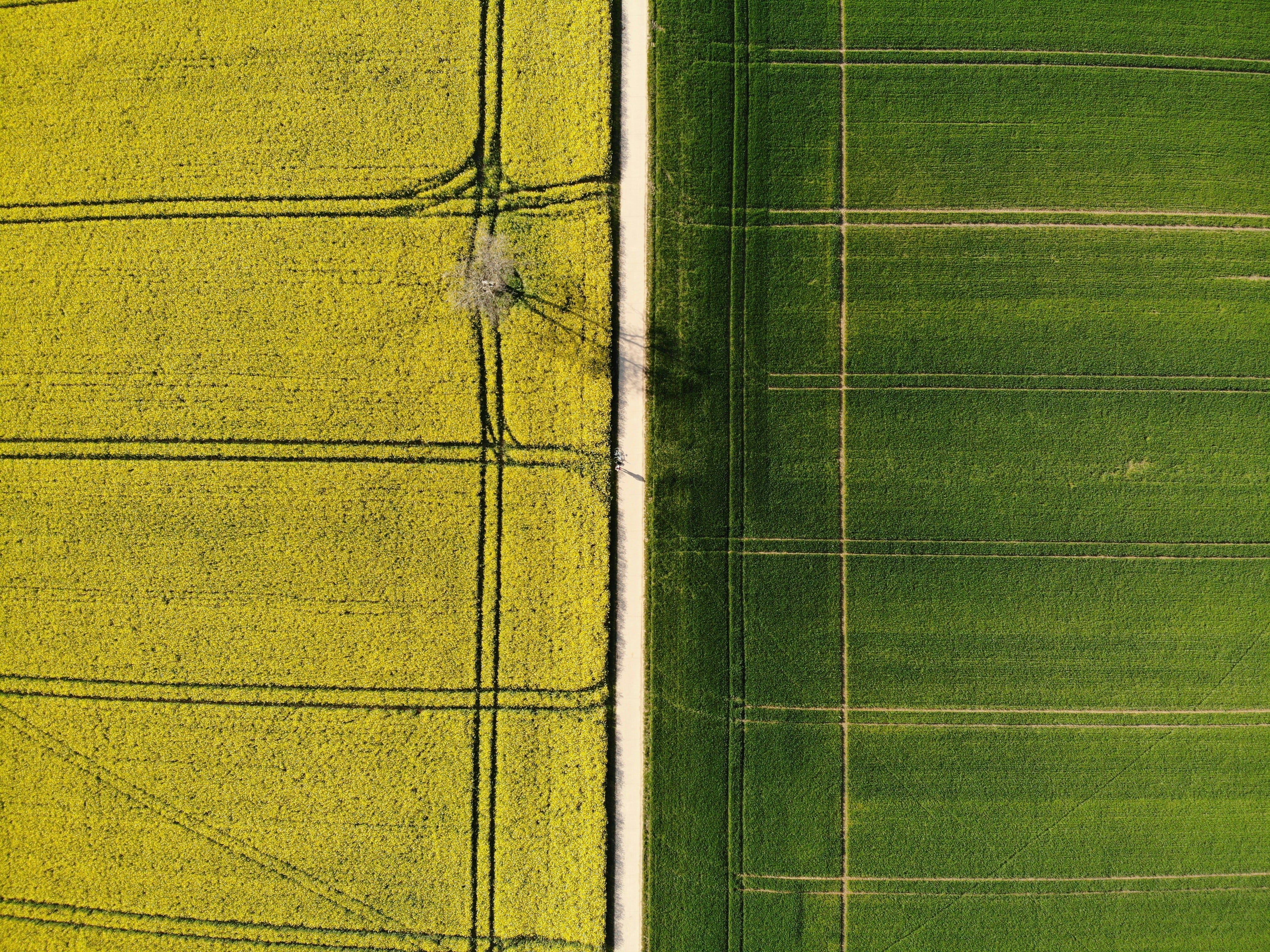
There are two kinds of people in this world. Those who think there are two kinds of people in this world. And the rest of us. The world invites categorization or complication—another two kinds, but only one of those is in short supply.
Apparently, there are two kinds of a lot of things. Two kinds of heroism. Two kinds of credit cards. Two ways to swallow pills. Two avenues for global economic openness—openness to competition or openness to capital flows. Two versions of happy people—those avoiding discomfort and those earning peace of mind through virtue. Two kinds of citizens—responsible and irresponsible, though that binary emerges only after a careful narrowing of what counts.
Two kinds is a narrowing, but it is also a pressure. There is this or that—which do you choose? Are you Type A or Type B? Organized or disorganized? Do you hang toilet paper over the roll or are you a brute? Do you have an iPhone or are you a green bubble? Are you with us or not? And what of “us”? Are “they”—or “us” for that matter—really all that internally coherent?
Can two kinds be the same thing instead? In her short story, “Two Kinds,” Amy Tan explores the many ways that Jing Mei Too—a Chinese American woman—swung between two kinds when she was a girl growing up in an immigrant household. She was either a potential prodigy—maybe a Shirley Temple-style actress or a genius capable of naming world capitals on demand or even a virtuoso pianist—or a failure. She either filled her mother with pride or humiliated her with shame. She was either an obedient child or a defiant one. She was either someone who gave it her best or the pathetic being who never tried at all.
But where was Jing Mei in all this? Disappointing her mother once again after failing to memorize a page from the Bible in three minutes, she retreats to the bathroom. Looking in the mirror, she at first sees what confirms her mother’s dashed hopes—”this ordinary face—I began to cry. Such a sad, ugly girl! I made high-pitched noises like a crazed animal, trying to scratch out the face in the mirror.”
But then, after blinking through tears, after the other-imposed reflection has faded, she sees something else. Something new. She sees “what seemed to be the prodigy side of me,” someone who is “angry, powerful.” The two kinds are not the one-dimensional ‘perfect girl’ or ‘worthless girl’ versions of her that she feels destined to fulfill, but rather the sides of her own inner battle between self-actualization and disappearance, the “Perfectly Contented” and “Pleading Child” piano pieces by Schumann that she only learns decades later are just “two halves of the same song.”
Two kinds can also be a dynamic. Her mother aches to be seen as achieving the “you can be anything” dream of America in which she has placed all her hope, while Jing Mei longs to be seen by her mother just as she is—the girl who plays “this strange jumble through two repeats, the sour notes staying with me all the way to the end,” to be accepted as the girl with the missing parts who cannot be only the realization of her mother’s dreams held tight. Something escapes two kinds—either lost in the first place or bleeding out of the original constraint.
But a binary can be quite real. In or out. Up or down. Open or closed. It is even a code—the simple base language at the heart of expansive machine complexity. It works with us too, doesn’t it? With or without you—aren’t those the only options? Oh, but how grief complicates that narrative. The you-and-me-relation dissolved the breach and became a space—so I was neither with or without you but in your presence or absence, sometimes both at the same time. And when I lost you or after you passed away, I still find myself in that field with the sideways sun illuminating textures. To move anywhere I need to pass through, to walk among the tallgrass and the purple asters and the hazy goldenrod that came up from our soil. Even now, from outside of the field, I am still brushed now and again by parachuting seeds, aloft from our winds, searching for new ground. Farther out, galaxies collide and their central black holes orbit each other in a binary configuration. For us, this phase exists on a timescale far beyond our own. For them, the binary is temporary, ultimately dissolving when they run out of stars to distract them, when their circling becomes a merging, when the gravitational waves strengthen as two kinds become one.
Two kinds, though, starts very small, at the cellular level. As psychology professor Jeffrey Nevid explains: “The firing of any individual neuron is an “all or nothing” event, a binary process in which the cell either fires or doesn’t fire.” Our very embodied all-or-nothing way itself becomes part of a mental binary—our lived experience combines this need to categorize and classify with our gradient thinking in depth of emotion or shades of gray. One sorts—an ocean, a shore. One allows for spaciousness—ocean and shore as both indivisible and permeable to each other, waves erasing any line we try to make in the sand. Do we treat our relationships with our binary brain—you are not meeting my needs—or with our gradient one—I invite you into what means a lot to me and I, like the waves, can only ever respond to your existence.
Neuroscientific research suggests two-kind thinking reduces us. It triggers our amygdala, flooding us with stress hormones and taking our executive functioning and our empathy offline. Psychologist Andrew Hartz describes how all-or-nothing thinking is a defense mechanism against ambiguity. If this were a problem on the individual level, perhaps individual-level solutions could address it. But binary thinking is the socio-political water in which we swim right now. Can we just write it off as our evolutionary inheritance and wash our hands of responsibility? Maybe, but maybe it is more shades of gray. In a Times editorial, Mark Edmundson, author of The Age of Guilt: The Super-Ego in the Online World, recalls a teacher who
once gently called my classmates and me out on our predilection for binary thinking. “So,” he said, “do you think that chocolate is the opposite of vanilla? Do you think that dogs are the opposite of cats?” Are wrestling and boxing truly opposites? Sweet and sour? David thought that this hunger for binaries was a cultural matter, and overall, I do too.
Two kinds only stay that way when we insist on their isolation, when we keep sweet always away from sour and never marinate in the sauce. When up is always up and down down, where does upside-down belong? “I is another” said Rimbaud, implying not just that we are multitudes within, but that your “I” is merely another me. In our bodies, through touch, categories dissolve and the separation of me from you becomes its own falsehood—as Neruda writes “where I does not exist, nor you, / so close that your hand on my chest is my hand.”
Two kinds, though, can be preferable at times. You go shopping and only need to choose—bar soap or liquid, or sea salt or table—and not a hundred gradients in between. Have you ever spent an inordinate amount of time doing research on what kind of sleep sack to buy for your newborn? I certainly have. I can tell you that he still woke up every three hours, hungry, needing me. Abundance is what we seek, and yet abundant choice can overwhelm us. Psychologist Barry Schwartz explains that there is a point where the massive array of consumer choice “starts to be not only unproductive, but counterproductive—a source of pain, regret, worry about missed opportunities and unrealistically high expectations.” Too much choice can lead to hasty decision-making meant to tamp down the emotional overload. Yet, economists remind us that the more consumer choice there is, the more companies can get closer to meeting our ideal product. The strange byproduct of such a differentiated market is that the binary has shifted elsewhere, somewhere less obvious but more concerning. Researchers looking into this increased competition at the product level have noticed that
small groups of megacorporations are effectively enjoying monopolies at the industry or ownership level—much more so, in fact, than previously thought.
Exploiting data from MRI-Simmons, a provider of attitudinal and behavioral US consumer insights, the researchers determine that almost half of US product markets—including food and beverages, health care, apparel, and electronics, as well as a slew of nonmanufacturing markets, such as insurance and financial services—were “highly concentrated” or dominated by two or three multinationals. Over time, the likes of General Mills, Nestlé, Procter & Gamble, and Unilever have systematically acquired and subsumed other consumer brands. This trend notionally gives them not only market share but also the lion’s share of market power by which to influence or even set prices.
Similarly, tech companies have shut down the competition by buying it out, and then continue on—our choices reduced—to negligently dilute the user experience of their own platforms. Why care when there is only one kind spawning itself repeatedly? But where else is there to go?
Perhaps some self-examination is in order. When I taught 9th grade English, I used to do an activity near the start of the year where I asked the students to use a shoe box to depict how they are seen (outside of box) and how they see themselves (inside) as a way for us to open discussion of social versus personal identity. And then I did a strange thing. I paired Doris Lessing’s “Through the Tunnel” with Camus’ “The Guest” as reading for homework.
“Through the Tunnel” is a story of an eleven-year old English boy named Jerry who travels on holiday with his mother to the beach in a foreign country. There, he cautiously but curiously strays from his mother—who is spending her days at the crowded, main beach—to explore the wild, rocky part of the coast. Here, he comes across a group of local boys who he longs to belong to “with a craving that filled his whole body.” But he soon discovers they are engaged in a game he is both terrified of and as yet incapable of playing—diving deep into the sea and swimming through a rock tunnel whose existence for him as a barrier to entry—to the tunnel, and also to their shared brotherhood—puts him in a space between two kinds of outcomes: either they drown as he sits counting worriedly or they come back up to the surface. Either of these results, however, would be better than “the terror of counting on and on into the blue emptiness of the morning.” He doesn’t belong to them, he has no control over what happens to them, he wields no power, and the primary binary which defines him is in contrast to his mother—her wavering between mild concern and desire to give him freedom, and what he exists as in the composition of that relationship, a contrite boy alternately “defiant and beseeching.” The external world is still just a gradient of colors—”stains of purple and darker blue…an edge of white surf…water over white sand, and, beyond that, a solid, heavy blue”—or the emptiness of minutes and days he can only fill by counting or “splashing and kicking in the water like a foolish dog.”
After his panic at what might happen to the boys as one by one they disappear underwater, after their subsequent surfacing “like brown whales” and then grabbing their things to run off to another promontory, Jerry finds himself alone enough to cry—in fact, “he cried himself out.” Whether he realizes it or not, he is seeing with the eyes of a mother—worried about the boys drowning, counting the seconds until they reappear, finding himself embarrassed at his concern once discovering their unbridled joy in a kind of audacious experience of the world a mother must give up in order to remain a safe landing.
Jerry has his mother buy him some goggles and begins attempting the dive. Training, in fact. He practices controlling his breathing in and out of the water. He holds onto large stones as he descends down beside the underwater rock in order to probe and assess the tunnel’s opening. And, as he begins to approach the world with “a curious, most unchildlike persistence, a controlled impatience,” the validation he seeks shifts in source—from his mother to the world itself. He sees with “eyes of a different kind—fish eyes that showed everything clear and delicate and wavering in the bright water.” He anchors himself to rocks, not mothers. He holds his breath for two minutes while watching the seconds pass in the villa and is independently “authorized by the clock.” Finally, right before he makes his committed attempt, he finds that his feelings too have become a different two kinds—not pleading or contented in response to his mother, but “trembling with fear that he would not go, and…trembling with horror at that long, long tunnel under the rock, under the sea.”
And then, after extreme effort, he succeeds. With his external self tested and proved against the world, he finds he no longer wants to join the boys who, after he lies recovering from his successful dive on a rock he sees playing elsewhere down the bay. He also no longer needs resistance against his mother in order to define himself. For when he tells her he can stay under water for two minutes and she cautions him about safety, the table is set for “a battle of wills, but he gave in at once.” Jerry’s yielding is not a surrender, though; it is the quiet awareness of a being who is itself an agent in the world.
Daru, the main character in Camus’ “The Guest,” is a school teacher in French-colonized Algeria. He lives amidst a region “cruel to live in, even without men—who didn’t help matters either,” under a sky which reveals “the solitary expanse where nothing had any connection with man.” In this harsh, isolated landscape, he teaches the local children and helps the nearby families by providing them with extra food when he can, but he is a man existing like one of the rocks in a “wasteland peopled only by stones.” He makes no choices, he holds no accountability, he is merely another invisible part of the plateau where “bare rock covered three quarters of the region. Towns sprang up, flourished, then disappeared; men came by, loved one another or fought bitterly, then died.” His existence is immaterial—to the world, but also to other humans.
One morning, a gendarme, Balducci, delivers an Arab prisoner to Daru and tells him the government has ordered him to deliver the man to a nearby police station the next day. Daru resists the order vocally, but still signs the paper Balducci instructs him to sign.
As Daru observes the prisoner throughout the evening, unfamiliar with deciphering another man, he finds many faces looking back at him: someone “attentive and studious,” then “restless and rebellious,” later with “feverish eyes,” and as they eat together before bed, an expression “vacant and listless.”
What do you become if there is no one to press up against? No friction? No body to hold and wonder at its otherness? No enemy whose contrast evidences the story of your righteousness? You become a vast expanse, open but meaningless, indecipherable and also unable to translate otherness into meaning. You become both a host and a guest, unsure which role is yours as Camus cleverly indicated when he gave the story the title “L’Hôte,” an ambiguous French word where hospitality is determined only by context. Which kind is Daru? Is he the person receiving? Or the person being received? Two kinds. Up to now, he has chosen neither. Is neither a choice?
Now, with another person deposited into his life, he finds himself facing a dilemma which requires a choice. He has been told the man killed his cousin, a crime which “revolted him, but to hand him over was contrary to honor.” Certainly, choosing between another’s man honor and your own would be hard for anyone. Why then does the presentation of this choice make Daru ashamed? Just thinking of it “made him smart with humiliation.” Perhaps because choosing itself will require a commitment of the kind he has avoided making for years. His next move? He returns to circularity and immobility—the repeating motion and lack of motion he is comfortable with. Neither moves him anywhere new. He goes outside, walks in a circle, waits “motionless” and then returns inside. He scrapes the parched soil just like one of the plateau’s rocks. He shrivels, like the earth “little by little, literally scorched, every stone bursting into dust under one’s foot.” Here now is a real foot, a tangible foot, the foot of another human that has walked miles to get to him, and, in his little white-walled room whose silence used to unnerve him, now, “this presence bothered him.” He sleeps next to a man in true crisis, and the outcome of this crisis is now—at least in part—in his hands.
What does Daru choose? The next morning, after coffee, he looks out at the “deserted expanse. He thought of Balducci. He had hurt him, for he had sent him off in a way as if he didn’t want to be associated with him. He could still hear the gendarme’s farewell and, without knowing why, he felt strangely empty and vulnerable.” The prisoner coughs, and Daru—in despair—throws a stone into the snow. Despite his isolation from man and accountability, it has found him nonetheless. And, even after Daru and the prisoner walk out onto the plateau and he shows the prisoner which way to the police station and which way to pasturelands and nomads, even after he attempts to pass off the responsibility of making a decision, he knows. His opposition to making a choice for the prisoner is still a choice. He is implicated.
Whereas Jerry moves willfully from being defined in contrast to his mother to being defined against the world, Daru moves involuntarily, against his desire to be nothing in nothingness, to being the man who is a betrayer. For, when he returns to his little classroom and finds these words written on the blackboard—”You handed over our brother. You will pay for this”—the landscape changes around him and he in it. Momentarily, as he walked the prisoner and perhaps convinced himself he was doing right by the world, by his honor, he felt “a sort of rapture before the vast familiar landscape,” but quickly that dissolves and before he leaves the man, the landscape takes on “a chaotic look.” Alone back in his classroom, but no longer a solitary being disintegrating into the vastness, he looks “at the sky, the plateau and beyond the invisible lands stretching all the way to the sea. In this vast landscape he had loved so much, he was alone.”
Two kinds. The kind that chooses to act and be accountable—to others or to the black vacuum of an underwater tunnel—and the kind that seeks invisibility and is forced into form anyway.
My daughter has a stuffie acorn that she named “pine needle.” Not an anomaly, but a different sort of two kinds—two kinds through association, through shared category (trees), and through creative connection-making. The fluid nature of a child who seeks her own form in seeing, naming, making. Fluid and form. Emptiness and resistance. Sometimes there really are two kinds—two kinds shaping and forging each other, two kinds sensing and responding. Two kinds that are not halves of something whole, but energy and its reverberations, neither of which we could do without.