

This grieving, susceptible, penetrable me
friction on the outskirts, friction cutting through

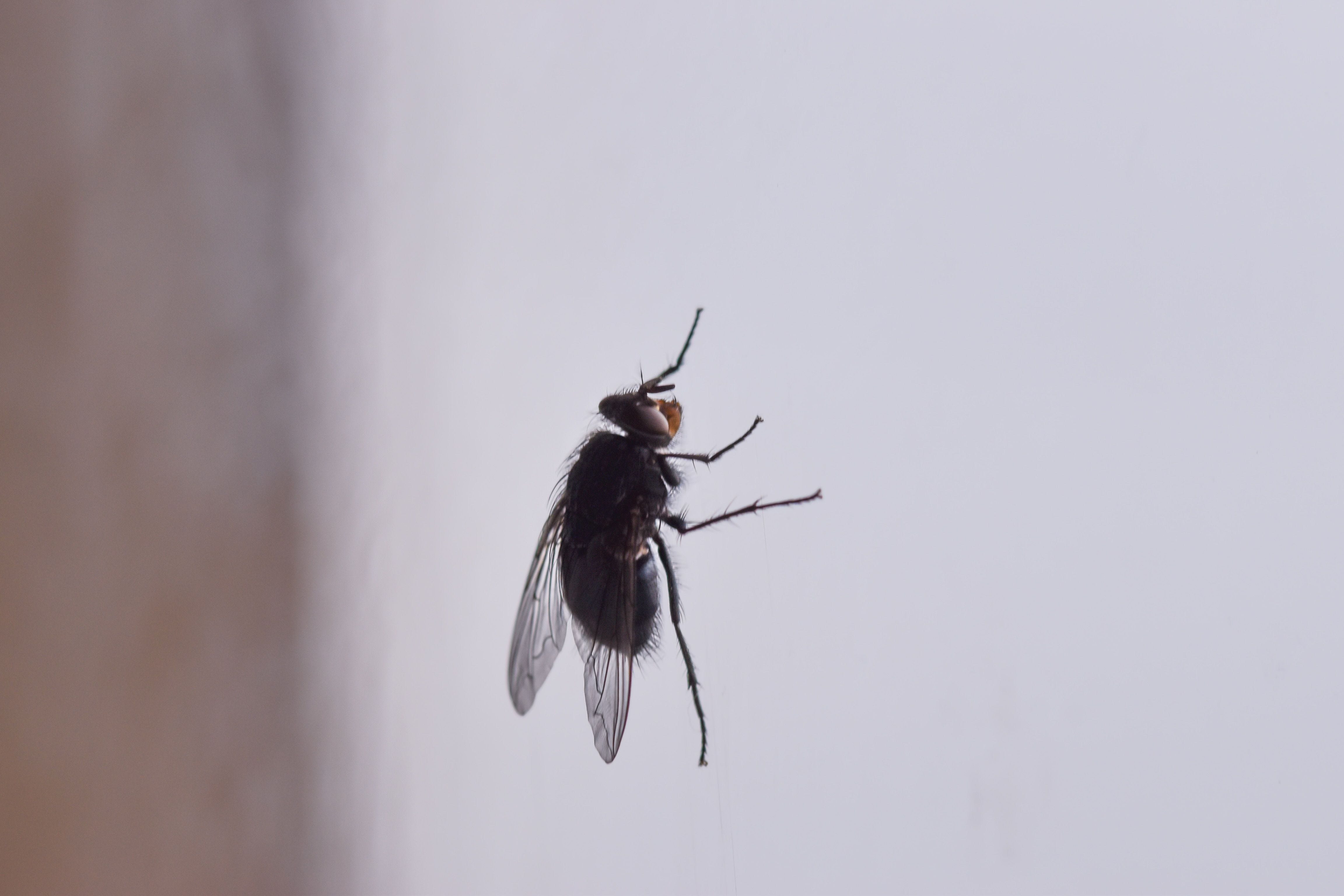
The buzz of a fly and a bone-cutting saw
It was 4:42pm. The kids all happened to be in the basement. My oldest had returned from a school trip to Quebec late the night before and was hanging out with some friends. My younger two kids were washing doll clothes in their particle board washer and dryer. 4:43 now and a moment of freedom opened itself like an orange seductively removing its own peel to reveal juicy, sticky, sweet unobligated moments. I grabbed my glasses and my current book, The Morning Star, exhaled out needs and demands and snacks and accidents and scary spiders, and sat down on the couch. I carefully folded the spine against itself, stroked the pages to spread them wide, and began where I had last left off:
He started the saw again.
But the eyes that lay open there were not dead. There was life in them, I knew…
Buzzzzz. Buuuzzzzzzzzzzzzzzzzzz.
A large black fly rocketed over my head and bounced audibly against the window. Shit, I thought. When my daughter had opened the door and begged to go on the back balcony minutes earlier, she must have let it in.
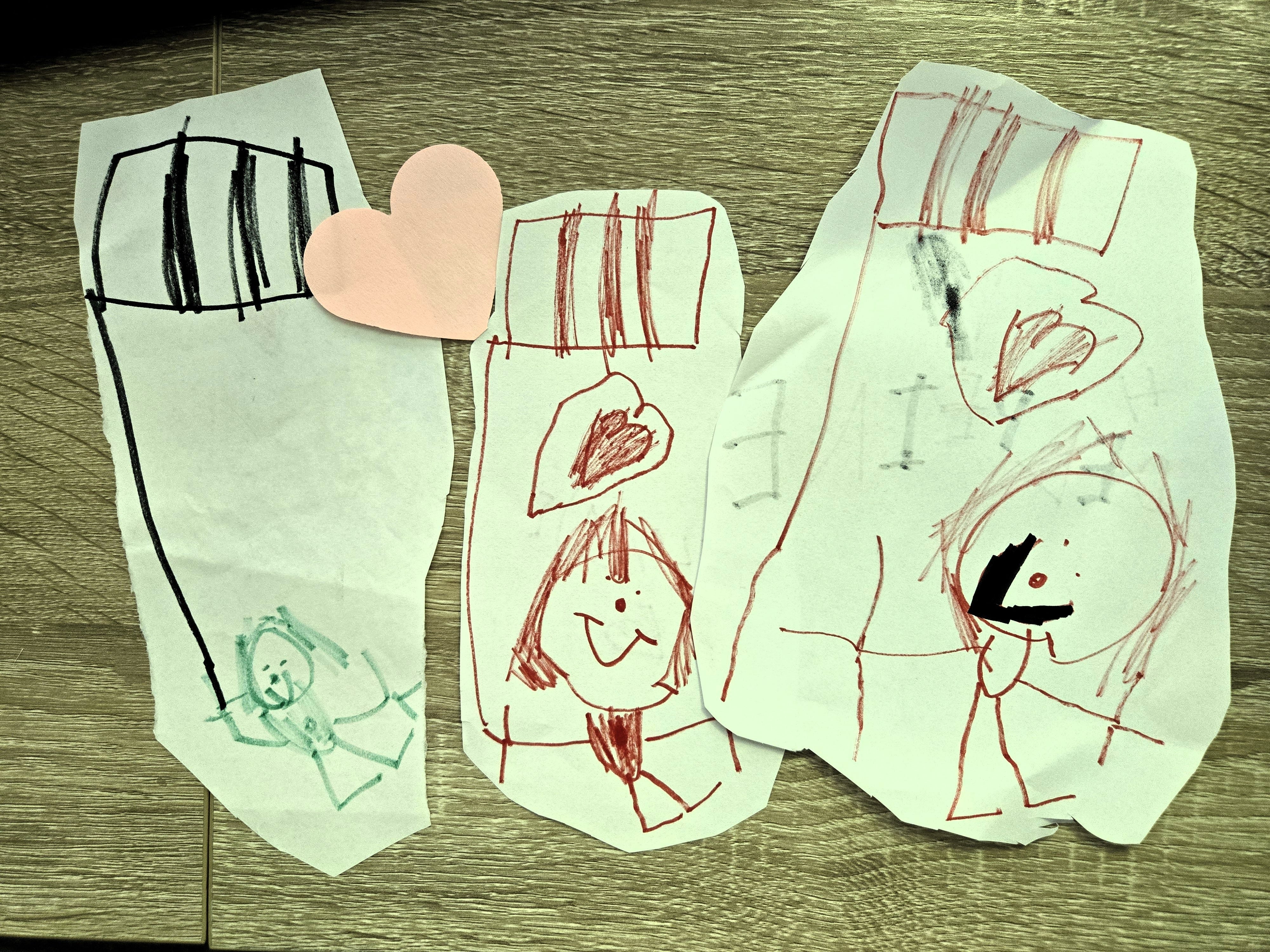
“Okay,” I said aloud to the ostensibly still room or to the fly who couldn’t understand me. “I need a good swatter.” Something firm, yet pliable. I looked to the pile of books on the small table beside the couch. Nope, too thick. Nope, hardcover. I found a slim volume called The Sunflower which ironically is subtitled: On the Possibilities and Limits of Forgiveness. “Alright, where are you?” I called out to silence. I stood armed, looking stupidly ready to attack with an 8x5 inch paperback in my right hand. I heard nothing and repositioned the book to gain a better grip, its small cover overflowing with drawings my daughter had gifted to me—smiling stick figures holding giant flags—and one cut-out heart that must have fallen off a separate art project.
Hearing nothing, I sighed and placed the weapon down. Back to Knausgård:
…it. It was as if he were looking out at the world from a place far, far away.
Yet the heart was not beating. And the brain had been without blood for some time.
It didn’t…
Buuzzzzzz.
I leapt up and got into some confusing mash-up of a ready tennis position and a defensive basketball stance, and squinted hard. As if my slitty eyes alone would scare the thing to death.
It really is surprising how loud a fly ricocheting off of glass is. This particular fly, though, was not a lingerer. He was hopped up on some dopamine-caffeinated fly concoction. Boom, boom, boom. He rammed into windows on perpendicular sides of the room, ferried up to the skylight, and—just as quickly as he had appeared—disappeared around the corner in the direction of my office. I heard excited voices from the basement and was quite confident my kids were either engaged happily in dramatic play or were escalating into a fight which I would soon be enlisted to resolve. Across the room on a table in the corner, I noticed a folded up magazine that I had used to annihilate previous flies, the dried blood still splattered across now illegible words. Much better weapon, I thought as I retrieved it. Then, I retreated quietly back to the couch, carefully hiding the noise of my existence from everyone.
…matter. There was life in those eyes.
“Are we certain he’s dead?” I said. “Could there be something wrong with the balloon?”
Both the Oslo surgeon and Henriksen looked at me in annoyance.
“It’s just a reflex,” the Oslo surgeon said. “He is brain-dead. The heart has not beaten for ages. It’s not possible for there to be life in him.”
Buzzzzzz.
I was up before he even arrived in the living room. He caromed around and out of the room. I chased him through the kitchen, through the hall, and into my office. I heard him, but couldn’t see him anywhere. How was that even possible? He was gratingly loud. But my eyes couldn’t register his whizzing, humming being no matter where I swiveled my head. I returned to the couch, but didn’t sit. I stood there with the magazine and tapped it against my left hand, practicing some futile warm-up exercise for an encounter that was far from certain. My oldest son came into the kitchen and put some food into the microwave to heat up. Beep, beep, zzzzzz. The fan whirred and I turned to him in annoyance.
“I can’t hear the fly,” I explained to him, exasperated. He looked at me blankly and then pulled out an ear bud. “What?”
Buzzzz.
“Nothing, nothing, there he is!” He had finally landed, but on a screen instead of a window pane. In fear of damaging the mesh, I hesitated and then, as I swung forward without full commitment to the swing, clumsily let go of the magazine, huffing breath out of my nostrils in dismay as I watched it tumble to the floor and the fly zip off towards the unreachably high skylight.
“What the…” my son laughed at my buffoonery, and I turned to him helplessly. “Do you see him?”
“Yeah, he went under the shade.”
“Okay, okay,” I said. I crossed to the balcony door and reopened it. “Come on little fly,” I called again to the insect, my words hitting his exoskeleton as meaningless vibrations. “Come on. Over here. Be free!”
“Mama!” Something had happened in the basement. And someone had decided it was time to involve me, consequences be damned. I exited to put the wheels back on a plastic car or take away a toy that precipitated an argument or clean up a milk spill. When I returned, I heard nothing except my son singing a Miley Cyrus song in his cracking, squeaking, thickening, slightly foreign voice.
“Did you see him go out?”
He shrugged and started to pull out an ear bud again, but I waved him off.
I sat on the edge of the couch cushion, holding The Morning Star in my lap, and waited. I waited for as long as I thought it had taken the fly on his previous laps around the house. I waited until my mind seeped into the book in my hands and I began wondering about the dead man they were preparing to take organs out of, the man who suddenly seemed to be inexplicably alive. I waited until I forgot I was waiting and I almost forgot about the fly.
“I think he’s gone,” I finally said to my inaccessible son.
I closed the balcony door. I felt relieved, but I didn’t trust it. This didn’t happen—things just resolving by themselves. I couldn’t remember a recent time where a problem just flew out the door, taking its grating noise, its bothersome zipping and anxious energies with it. Taking itself clean away without any action from me. I pushed back into the cushions and read, uninterrupted, for the next half hour.
Why now?
I’ve been thinking about something lately that I can’t quite put my finger on. It has something to do with this: when I came back from dropping my kids off at school this morning, I heard a cry descending from a row of houses on a ledge above our street. It was a woman. At first, I thought she might have been arguing with someone because, though I couldn’t distinguish individual words, her tone was distressed and agitated, falling towards me in almost animal-like yelps and howls. I stopped, though it was of course none of my business—but her crisis had invaded our neighborhood through sheer noise alone, so I felt obligated to know more. Then I distinctly heard crying and finally, Why now? starting as a lamenting moan and then Why now?! crescendoing into a question inherently moving and objectively foolish all at once. It can only be now, of course. It can only ever be now.
I was a good student in high school. Merely good though and not outstanding. I was good because I was compliant and oriented to please, but I lacked as yet any awareness that I could place myself in the driver’s seat of my own education. Being good, I was often put in Honors classes. For the most part, I worked hard and I stayed there. But, in ninth grade, I was placed into Honors Physics and I so intensely detested not the class per se, but the feeling of total confusion I had in the class that I sought out my advisor and was moved into regular people, conceptual Physics. It wasn’t that the math was too complicated—I was simultaneously in Honors Geometry on the fast track towards advanced topics offered in the department. It was something about how all of the dynamism, magnetism, electricity, and energy of life were transformed into equations. How phenomena became so quickly abstract. I wasn’t comfortable with that move. It was too easy, too—ironically—frictionless. Back in conceptual, inquiry-based physics, we made hidden structures visible. We tied washers to strings and then timed the swings. We rolled balls down inclines and recorded how quickly the balls moved from one tape mark to the next. We made circuits to light up tiny lightbulbs. We saw force, energy, and acceleration demonstrate themselves in front of our eyes. But instead of loving the hands-on nature of the curriculum, I hated this class too. I kept noticing something stealing energy, something slowing down acceleration, something damping the pendulum’s beautiful arc into smaller and smaller swings. I had gone from no friction to too much friction and now I noticed it everywhere, explaining everything that was wrong with me—why I had such a hard time getting started on things, why I couldn’t slide amongst my peers like some slippery, gliding, levitation imitation, why I was endlessly moving towards myself when that was the one thing I wanted to escape.
The problem was never that I didn’t understand physics. The problem was that I didn’t want to. I didn’t want to know that it was a universal law—and not just my own awkward social dislocation, my own interminable flaws—that the thing that resisted my forward motion was the same thing that would enable it.
A number of years ago, Roxanne Gay came out with her book Hunger. It was subtitled A Memoir of (My) Body and when I got wind of it—perhaps through a faculty member chatting to a colleague at the college where I worked at the time or perhaps by some other arrival—my first reaction was anxiety. I had not read a single word, but knew it centered around the experience of being overweight, of her disordered relationship with food, and how both intersected with trauma she had experienced as a child and since. She writes how the book is “a memoir of my body. My body was broken. I was broken. I did not know how to put myself back together.” My anxiety had nothing to do with what Gay wrote about, how good the book may or may not be, or whether it was a “thing of raw beauty” as USA Today described it. My anxiety had to do with her subtitle and the suggestion that this was a memoir of all bodies when it so clearly was not. It was highly personal and imprinted everywhere with Gay’s own emotional states and biting sense of humor. My restless feeling had to do with the opportunity which, in my mind, was already expanding out into something wildly different than what Gay had done. What if someone wrote a memoir of the body, not just their own body? The body observed anthropologically and with as much participant-observer detachment as possible. Just witnessed. Described. Daily. What would that look like? Wouldn’t that be amazing? It certainly felt like something I wanted to read and so I decided that I would write it.
Every day for the next ten and a half months, I wrote about what was going on in my body. I wrote in paper journals while commuting on the train. I wrote in emails to myself late at night when I hadn’t had time all day to monitor the thing that carried me. I made notes in the margins of books I read or across the white space in the back of The New Yorker where the cartoon contest that I had never cared about offered up its captionless taciturnity. I called it Primary Home.
I found one of these old notebooks recently and I reproduce excerpts from just the first few pages here:
Excerpt #1: I woke up at 5 today in order to run. Actually that’s not quite true. I woke up some time around 1am with a full bladder, woke up at 3am again to pee and looked at the old, offline iPhone I use as a clock beside my bed to see the time, woke up again at 4am on the dot, woke up at 4:40 and then finally got up at 5:07am. I’m sure I drink too much liquid right before bed which interrupts my sleep—hot water with some chocolate almond milk—but it soothes me and weighing the two, the soothing is more important to me than the repeated wakings.
Excerpt #2: Speaking of physical intimacies, J’s drop-off this morning was tough. He clung to me, didn’t want to go into the preschool classroom, and then agreed but wanted me to pick him up. As I held him and entered, we saw Sarah, the director. She greeted us. “Can you say good morning to Sarah?” I asked him. “No,” he said and turned his face inward, nuzzling deeper into my neck. He is heavy to carry now—being just over 40 pounds, but I don’t often feel the heaviness. When I hold him, it rather reminds me of the time our two bodies spent as one, everything all bound up and interconnected. He came through me physically and my sense of bodily existence was forever altered by him. Even though we exist as two separate bodies now, something remains of the shared physicality. I don’t know that I will ever see myself as an isolated individual again—though the silliness of that strikes me…as in how could I ever feel who I was when I came through my own mother. Our brains cannot access those memories, so it seems only the mother whose sense of self becomes both divided and exponentially increased. My physicality now seems to me a stretched elastic looping between so many others, past and future.
Excerpt #3: Today is a day of diarrhea, headaches, and exhaustion. And so I decide to take all the food out of every cabinet in the kitchen, wipe all the shelves down, sort through every item, and reorganize the keepers back in a more logical fashion. Often when I feel the worst, I push the hardest. I do the same with workouts. Feeling the most tired and overworked, I make myself do extra sets or run harder and faster. Punishing myself somehow for being human.
Excerpt #4: Yesterday my yoga teacher put us into a gentle inversion at the end of class prior to savasana. We raised our feet to the ceiling (waterfall pose) after being in supported fish pose. I never find this particular inversion calming—with my tight hips, I have to fire up my abs to hold my legs up. As I repeated my mantra—I am—and tried to relax all my other muscles, my teacher said: “let this physical inversion inspire you to take on an inverted perspective on a problem in your life.” The first thing that struck me was that here in class, the physical can alter the mind in and of itself. That was an inverted position for me to take, although I know full well that pain can preoccupy your mental state or sexual pleasure can calm the mind. Most often though, I focus on how my thoughts alter my physical experience—old emotional trauma trapped in my musculature, stress impeding my digestion. Next, my thoughts turned to the only thing that seems a veritable “problem” in my life and I wondered how to invert my father, because I couldn’t imagine inverting my perspective of him.
Excerpt #5: I’ve been doing this thing with my lips lately where I pucker them inwards, rub them together, and bite a little. It all seems some sort of process to diminish their largeness. Doing it now makes me recall I used to do it in high school when I was mortified by my full lips—I felt like a cartoon character. I felt potentially noticeable and that was terrifying. I’m not sure what’s going on now—maybe I want to be invisible again.
Reading from this notebook, over ten years later, a few things stand out to me. First, I failed spectacularly. Every entry was an unfortunate intimacy with me, not some objective truth about living in a body.
Second, my mind can never fully stay in the body. Each physical observation led to questions about my life, about life itself, about motion and meaning, loss and confusion. Where I wind up pondering the strangeness of not remembering my first kiss whilst knowing the story of it. Where I recognize the profundity of pregnancy in its narrowing of focus—”for nine months, my life was so clear, my own body secondary. And it is when purpose came before the physical that I came closest to happiness.” Where something of the fallacy of linear time is revealed by my body when it “tenses as the time collapses and compresses towards me. I am so thoroughly enjoying my conversation with Anthony yet again and the time is not a big enough space for our bodies to occupy, for the words I want to open to him and explore, to the expansion of this moment that I want to happen. Like a coffee machine pressing grounds, I am pushed downwards by the time that is moving onward while my physical being attempts to exist in the state of timelessness that opens when you are with someone who…who does what exactly? Who stimulates my thoughts and my being, who invades me in a way I invite and not nearly enough, who listens to me as if I am actually as interesting, creative, and thought-provoking as he is.”
Finally, it all sounds so terribly agitated. My toes curl as I sit on the train, one eye seems to water almost continuously in the cold, I tighten my jaw involuntarily, and I keep getting sexually aroused at inopportune times. My lack of sleep one day leads to what I called “aftershocks” where even the pen I wrote with “with its sumptuous flow is irritating me because my hand can’t be bothered to form letters cleanly and so everything looks like slop—and I blame the pen.” And, as I sit within these reflections, what strikes me is that my primary home is defined by friction: how much feels very wrong so much of the time within a healthy, young body—the annoyances, the self-critique, the inability to apprehend the signals from one’s own physical self. Why is my eye itching? Why am I tired? What is the source of this or that malady? And how, even when I do recognize the signals—exhaustion, soreness, pain—I push my body to do otherwise. I assert myself over it as if there were a difference between it and I.
Starting one entry with this sentence—“The way it feels to be in my body right now—just all wrong”—seems to me now a version of my neighbor’s why now? The fact of my own existence simply cannot be ‘all wrong’ because then how could I exist? How this nonsensical manner of being embodied extends to a dissociative doubling as the foundation of experience (which I touched on in my doubling essay) wherein hearing the sound of your own voice from inside the house, so to speak, leads to “a doubling within the me I am inside, while the other me speaks—I can listen to myself as if she is someone else and am often so surprised by what she says.” How much of my bodily experience is both intensely felt and so seemingly repellent that “it’s like I’m running from the life I’ve lived or worse the one I haven’t or maybe from who I am.” And I wonder if this running was in fact just a recognition of the isolation of embodiment that we all attempt to overcome. How sometimes you can be pushed so deeply into that isolation, it seems unbearable. And how some people rage at this internal friction until it seems to break them—the inwardly unbearable exploding outward in shockingly horrific and incomprehensible ways.
In need of what is penetrable
I’ve been staying off of email on weekends, but about a month ago, I received a text from my son’s father that read simply So bizarre? With the text came a screenshot of an email sent from the school system. Two children in our community had died. Siblings. Found dead in their home.
I hadn’t opened the email. What the hell I texted him back.
I logged into my email and read the message before googling to try to gain more information.
Oh Jesus. The mother is being charged with murder I texted him a few minutes later.
Weeks have now passed, the funeral happened last weekend with hundreds of community members attending in shared grieving, and trickles of information have come out. The parents were in the midst of a contentious divorce. A guardian had been assigned and the children were to be handed off to this person the day following the murder. The day that didn’t happen. The mother had absconded to her aunt’s in another state where that family member didn’t recognize her in whatever state of unraveling she was in. She told her aunt what she had done. She said she had tried to cut her throat and then tried to jump off a bridge, but couldn’t follow through with either attempt. “I wanted the three of us to go to God together but it didn’t work,” she reportedly told her aunt.
But none of the facts come close to explanatory.
How to even reckon with this. Not why now, but merely why? Writing less. Shortening sentences. Leaving off punctuation. Removing letters one by one until there is something there that could possibly make any sense.
which
there
is
not
I am sort of ashamed to admit I’ve become wildly interested in this woman. I have shaken with rage at her. I have sought to pathologize her, diagnose her, define her, judge her, narrate her unnarratable act and life. I have searched for news items on her, read the disbelieving comments from friends who felt they knew a kind, gentle mother, zeroed in on photos of her before—in which her highly arched eyebrows wrap around bewitching green eyes, where she wears large, expensive looking necklaces and golden dresses accentuating her figure—and photos of her after—with disheveled hair and dried blood on her neck; with sagging eyelids, sagging chin, sagging lips; where she peers down so you cannot glare into her eyes; where she cries with head in hands. Where, in moments when I can see through my own loathing, I feel nothing towards her. I feel empty towards her, entirely disembodied in my own being, because not having a body myself is the only way to separate me from sharing humanity with her. From being but two bodies of something which is larger and intertwined. I don’t know what I was looking for in all of those photos, but you will hear said of those we feel are truly evil that their eyes are impenetrable. Hers were, but in the only response I could muster, so were mine.
In Joan Didion’s memoir chronicling the aftermath of her husband’s death—The Year of Magical Thinking—she explains that, as a writer, she
developed a sense that meaning itself was resident in the rhythms of words and sentences and paragraphs, a technique for withholding whatever it was I thought or believed behind an increasingly impenetrable polish. The way I write is who I am, or have become, yet this is a case in which I wish I had instead of words and their rhythms a cutting room, equipped with an Avid, a digital editing system on which I could touch a key and collapse the sequence of time, show you simultaneously all the frames of memory that come to me now, let you pick up the takes, the marginally different expressions, the variant readings of the same lines. This is a case in which I need more than words to find the meaning. This is a case in which I need whatever it is I think or believe to be penetrable, if only for myself.
Whatever I think to be penetrable, Didion said. Penetrable. Something you pass through. Something you force through with effort. Something hidden you finally grasp. I don’t mean to be crass, but I don’t think it is an accident that Didion chose a word which is also sexually charged. To penetrate. Sex becomes pleasurable because of friction, not in the absence of it. The soil where roots push hard downward, grip tightly into the dirt, is penetrable. The wall which must be walked around, but is penetrable by sound that comes through muffled and indistinct. The skin—this massive organ protecting all of our other organs and systems—is penetrable by a tiny but sharp needle, by a very specific tool meant to pierce and draw blood. Whatever I think to be penetrable. These things that penetrate—that which brings us intense physical pleasure, equally intense pain; that which grabs hold in order to push through, to thrive. As it was back in physics class, here again: force equals mass multiplied by acceleration. Force is our physicality, our very thingy-ness speeding up, slowing down, and changing direction over time.
Didion begins this section of the book with two words: “In outline.” Had she been living her life in outline? Protected from what penetrates by the “increasingly impenetrable polish” of words which built her a fortress and then from whose walls she drew her definition? Do we all live this way? On the outskirts of our own lives, tracing our own outlines, keeping a safe distance from the body that is tired, or aching, or pleading, or furious, or so trapped within its own outlines it loses any connection to meaning and others and life itself?
The murder of the MacAusland children has magnetically attached in my mind to the celebrity of another woman—a woman who seems this time not perpetrator but victim, not criminal but innocent, not an instigator of brutal, unspeakable acts but the recipient. Belle Burden’s memoir of the collapse of her marriage, titled merely Strangers, has become a runaway bestseller. It has its fans—women, know your finances!—and its detractors—Burden was and will remain a rich, white woman with homes in New York and Martha’s Vineyard—but what is missing from both accounts is the apparent insistence of her narrative to remain frictionless against the grainy backdrop of the broader world. While just a few pages in to the memoir, when it appears the woman her husband had an affair with has made a suicide attempt, Burden writes: “I felt panic then. James’ betrayal was going to cause waves of damage beyond me, beyond our family.” Yet, almost immediately after, those aftershocks are seemingly forgotten as the frame of her story shrinks narrowly to her own emotional destabilization and there it remains for the rest of the book. Her truest sentence may be this one: “But I was on one island, and he was on another, and I knew nothing, only the shock of his disappearance.” But they are not the only ones on islands. It seems her island of isolation divorces her not only from her ex-husband, but from dangers elsewhere in the world that have never posed a threat because of her privilege and, though she fears them more, still don’t.
She admits she has spent decades deferring to her ex-husband, but what becomes more clear is that, despite her acknowledgement that his version of the story is naturally different, she speaks as someone whose narrative he still has the power to rewrite. To me, this is the deeper layer of the story. Is her ex-husband the stranger or, without his outline, has she become a stranger to herself? When Burden first finds out about the affair, she happens not to be wearing her wedding band. Quite early in the pandemic, she had taken it off after a friend told her the virus can hide under rings. She feels a panicked guilt that maybe, somehow, not wearing her ring caused everything. The self-defined innocence feels weirdly sincere, but what stuck with me was the story of the ring removal itself. Far from any actual exposure to the virus, hidden safely away in a large Martha’s Vineyard home with few and distanced neighbors, her alarm about a nearly impossible encounter remains frightening enough to her that she takes off her wedding ring believing a virus she is well-protected from could somehow still harm her. This tiny ring—an existential threat. Something that might be penetrable. This irrationality felt to me akin, somehow, to the irrationality of the MacAusland mother. Highly frictionless lives—built to be just so—terrified of friction itself.
In his article titled, “The Anti-Social Century”, Derek Thompson explores how our increasingly privatized lives have led us to choose, not merely be passively situated within, isolated lives. We are not just lonely, we prefer solitude. Thompson references a paper by sociologist Patrick Sharkey
in which Sharkey calculated that, compared with 2003, Americans are more likely to take meetings from home, to shop from home, to be entertained at home, to eat at home, and even to worship at home. Practically the entire economy has reoriented itself to allow Americans to stay within their four walls. This phenomenon cannot be reduced to remote work. It is something far more totalizing—something more like “remote life.”
The most extreme “remote lives” can be constructed by those with the most privilege. Luxurious first class travel of the ultra rich entails many indulgences—lavish meals in the elite departure lounge, Porsche rides directly to the plane, massive 6-foot beds in first class, and endless people to serve you. But the most exclusive aspect of ultra-luxury travel is the lack of other people. Whereas your own yacht or island may have served as uber luxury in the past, now people are paying exorbitant prices to avoid the friction of other people. As the head of a lifestyle management company explains: “In the past, they would have asked for a private suite within a spa, but now they want to privatize the spa. They don’t want anyone else around.”
I am not going to tell you who these women are, because I don’t pretend to know. I do know they were both extremely wealthy, highly privileged people and it seems, at least in part, that when their highly frictionless lives were punctured by friction, they reacted by refusing it. They reacted by attempting to remain impenetrable.
The thing with friction is that its opposite is, counterintuitively, enabled only by friction. What if you could remove all friction? In speaking of the resistance of some Israeli Jews to acknowledge the suffering of Palestinians, regardless of the right or wrong of their position, Yuval Noah Harari explains how:
You show them images of a starving child in Gaza, and they will say: This is fake news. Or they will immediately divert the discussion to something else, like: This is because of Hamas. If you say: I don’t care. Are you able, for a few seconds, just to be there and acknowledge that there is a suffering human being there? — it’s extremely difficult for them to do it. Even if you tell them: Israel is 100 percent correct — 100 percent of the fault for what happens in Gaza is Hamas. Everything Israel does is 100 percent correct. Since it is so correct, since this is so just, it should be easy for you to observe the consequences of your perfect justice. Here, just look at this image. But so many people just can’t do it.
Even if removing friction were somehow possible, friction stubbornly remains nonetheless. Even perfect justice cannot make you impermeable to consequences. To be human is to live with things that rub against us, objects and others who move relative to our own motion, and forces which push back on us at every turn.
The slippery sliding frictionless impermeable world
It was almost two decades ago when biologist E. O Wilson wrote in Consilience: “We are drowning in information, while starving for wisdom.” That was then: before the growth of the internet, the integration of ongoing information into our daily lives through our smart phones, the ascendance of AI which is a contraction, of sorts, of our history, literature, and mess that has been digitized. Information comes to us not in digestible meals we pick and choose at, but in massive swells, traveling far from their origin, picking up what they may along the way, crashing down upon us as we shiver in the sand and convince ourselves that coughing up again for air—through the dark foaming water, through its churning turbulence—is some form of earned special knowledge rather than a survival instinct.
The amount of information we now swim in is more than humanity as a whole can process, let alone any one person. Moreover, as I’ve explored in my overembodiment essay, information does not come to us as cerebral abstractions but—just as in physics—it is connected to actual, experiential phenomena: a tightening we feel in the body, an action we feel incited to take, a change we commit to in our personal lives, even just the number of demands or ideas or input that trigger our nervous systems to overwhelm. Our stomach knots when we hear of upsetting news or receive a confrontational text. The words of a podcaster echo around and around, first in our heads, and then in our bodies as we build the message into our reactionary aggression or indignation. We change our diets, our speaking tone, our exercise habits, our commuting time because of information we research and then live within. We live in a massively friction-full world where we simultaneously seek frictionless “remote lives” and somewhere in this pendulum swing, the struggles and strengthening of permeability—and the import of its weight—are lost.
Part of the appeal of the artificial general intelligence project is the vision of a world without friction. You very often hear tech executives speak in terms of futures which are couched in idealized language, but often read as bereft of humans. Dario Amodei is famous for saying that AI will be like having “ a country of geniuses in a data center” which, not unimportantly, “would have a fairly good shot at taking over the world.” Sam Altman acknowledges the possibility of large-scale job loss from the growth and enterprise integration of AI, yet adds: “Some people won’t work for sure. I think there are people in the world who don’t want to work and get fulfillment in other ways, and that shouldn’t be stigmatized either,” a comment that seems wildly out of touch with the reality down on the ground here for most of us messy, struggling humans who require an income, health insurance, and retirement savings.
Despite all of the hype, the outlines of AI appear just as opaque as our own. Because AI agents cannot currently hand off any hard-won implicit knowledge developed through their task work, the learning they acquire cannot be passed on. As Tim Miller explains in a recent substack: When
an agent framework hands off control from one LLM instance to the next… everything the agent knows gets stored in a set of external files — [leading to an outcome where,] as Andreessen put it, “your agent is just its files.” By definition, implicit knowledge — knowledge that an agent can’t explain in natural language, code, or other explicit form — won’t survive these handoffs.
If AI makes potentially life-changing, scientific discoveries, but cannot explain to us how they solved these problems, we won’t be able to benefit from their insights. We won’t be able to apply the innovation. Their frictionlessness thereby becomes impenetrable.
Of the many things I’ve learned through practicing yoga for decades, one of them is that the practice is not about the poses. The more you practice, the more the poses become incidental and the transitions paramount. If you don’t see how eagle is connected to warrior three or how chair is the same pose as crow, then you are in an idea and not a flow. If you are trying to master flying pigeon, then you are engaged in a cerebral exercise, forcing your body into abstractions. Yoga is, instead, a practice of staying in the in-between, of softening into discomfort over years, decades until one day your body allows the practice to penetrate it and you find something shifts. The flow penetrates you, not the other way around.
People talk about Didion’s memoir as an attempt “to try to distance herself from the unfathomable through writing and research: writing, for her, can be a means of controlling the uncontrollable, including grief and loss,” but I think she is getting at something different, something more profound. She is more than capable of articulating the kind of delusional thinking that takes place in grief—that time does not proceed in linear fashion, that you need to be alone so your loved one can return, how grief and faith might be one and the same. But this kind of thinking is only delusional from the outside, from those of us on our islands as yet untouched by transport to this other world. It is not that Didion is trying to control grief, it is that her impenetrable fortress of information as control has been punctured. In fact, she herself has passed through. More than any of her other works, The Year of Magical Thinking is littered with questions: What did he mean? What was the meaning of the “gilded-boy story”? My unconscious child? If I had said it in time would it have worked? Had I understood nothing? Everything she reads or learns or once knew is now inverted, full of unknowns about its force, energy, and acceleration. She cannot demystify grief; it has obscured her to herself and now she must live in its incessant land of questions, in its “unending absence…the void, the very opposite of meaning, the relentless succession of moments during which we will confront the experience of meaninglessness itself.” There is one thing that unites the nations of the untouched and the grieving—meaninglessness, it turns out, is full of friction.
Why now? Why then? Why not later? Why does it hurt? Why isn’t it better? Why don’t they love me? Why am I unlovable? Why won’t it change? Why can’t it stay the same? Why? Why? Why? Isn’t this all we ever want to know? Why life, must you penetrate me so?
In her memoir about cancer, The Undying, Anne Boyer speaks often of our “un-oneness” which is not some healing unity, but
can hurt, just like any oneness can hurt, too.
We move in and out of each other’s holes or make new ones. We cut each other open, leave wasted bits of DNA around, leave shards of evolutionary codices discarded in our lovers and our mothers and our children. Many of us have bodies that other people have sometimes lived or died in, too. It can hurt that we enter and exit, are entered and left, that we are born into another sentient other’s hands and into the environment more sentient others built around us, born into the rest in the world, all capable of pain, too, which will make us hurt even more.
Sometimes it feels as if we are on a path as humanity to a frictionless world. It can sound beautiful or idiotic, but it often sounds easier than the one we live in. And yet. This thing we continually need: “whatever it is I think or believe to be penetrable.” Not what is penetrable, not that solely. But what we believe to be so. Do you believe in your oneness or your un-oneness? Is it the same thing?
It is a strange paradox that dismantling a system you benefit from will provide you with a fuller humanity. At the same time, removing yourself from systems that harm others is not an effective strategy. Those systems will find you and inflict harm on you regardless. The only difference is you will be less ready to handle it. Your muscles will have shrunk and withered in the world you believed to be frictionless. Impenetrable.
And so I return to what I believe to be penetrable. And this question of hands which vexes me endlessly. In an entry in my Primary Home project, I began with “What to do with hands”:
I think I’ve remarked here before on my awkward sense of my own hands, not ever knowing what to do with them—so I either fidget or put them in pockets—which is one reason I love dresses with pockets as large social situations already raise my anxiety and my consciousness of my hands is multiplied and so is my need to do something with them.
As I should. Put them in pockets. Clasp my daughter’s fleshy fingers between one. Chop vegetables for salad. Wash grass stains in the sink. Fold origami with them. Tie bows on presents with them. Run them through your hair, across your cheek, down your arms. Hold them open. Press them closed tightly. Place one over my mouth, both over my eyes. Sleep with them tucked somewhere safe amongst the curves of my body. Press up into a handstand with them. Read with them. Write with them. Dig holes with them. Sail boats with them. Swim with them. Extend out with them. Laugh and sigh with them. Weep into them. Wipe away with them. Let them answer questions words cannot and let them ask more than words can reach for. See them as something that can hurt and can cause hurt and thereby must be used with care, with intention, with full knowledge of pain and pleasure. Embodied. Penetrate with them all the while knowing they are too, what I believe to be penetrable. And full of friction.
In touch and penetrable un-oneness,
Katie