

Everybody Flooding In
Overembodiment in the Age of Saturation

Chapter 1: The Eat, Sleep, and Digesting Self
I have had the pleasure of listening to Sam Harris through many podcasts, interviews, panels, and his own channel. He’s a very intelligent man and—as can happen with confident intelligent people—he sometimes gets away with a logical sleight of hand. In a recent discussion hosted by the Institute of Art and Ideas, Sam was asked: Should we give up the idea of distinct selves as simply incoherence?—a question that was, in truth, a perfect setup for Sam’s nimble, but unsteady, reasoning.
His response was a version of what I have heard him say many times and it contains three main points: two premises that supposedly lead cleanly to his conclusion.
Point #1: The unchanging self is an illusion. You can’t find the self if you look for it. Neurologically, perception is distributed throughout the brain. Phenomenologically, if you look for a stable center of experience, you will not be able to find one; the sense of a stable, permanent observer-self is constructed.
Point #2: Most people nonetheless feel strongly that they are this observer-self—that they have experiences, that they aim their attention, that experience is “theirs.” Meditation and psychedelics, he notes, can reveal the permeability of the self-object structure.
And so, Sam concludes with Point #3: The self is an illusion. In short, Sam argues that because there is no permanent self—no stable observer you can locate—the sense of being a unified subject separate from your experience is an illusion. The feeling that you are having experiences, rather than just experiences arising, is constructed. Or, as the panel discussion is titled: “Why you don’t really exist.”
And yet.
A river is not permanent. A wave is not permanent. A flame is not permanent. Yet, we do not then conclude rivers and waves and flames are illusions. Or even constructions. We understand them as they are—dynamic processes, emergent forms. Sam suggests that the absence of something results in the illusion of something. The body has no single place where digestion happens. Is digestion an illusion? No, digestion is distributed.
The self too is distributed, or maybe more accurately, emergent. The self is quite real, but it is fluid and context-dependent. The self does indeed take on form, and that is no illusion. The more interesting insight about the self is not that it is an illusion or that it doesn’t exist, but that it is the message.
You may have heard media theorist Marshall McLuhan’s famous line: the medium is the message, which he offered to explain how the shape of a medium—radio, television, now social media—reshapes the meaning of its messages. Here too, the medium is the message. Only in this case, the self is the message and the medium is consciousness. Said differently, more-McLuhan-like: consciousness is the self in form.
Consciousness speaks through form. And if you erase experience, you erase the very medium through which consciousness becomes self-aware. Consciousness requires the reality of self. The felt self, the embodied self, the very self we feel is the observer because…well, it is. Sam might agree with this formulation, but his framework can’t account for it. When I watch the snow, of course that is me seeing its swirling or hurrying and whether it causes me pleasure because I am safely ensconced at home under a blanket or anxiety because I will have to drive home through it later, that is also me. And not me. It is like light refracting through a prism. Both the light coming in (consciousness in a non-self way) and the light refracting out (consciousness through our particular form of self) are real…and connected. Different and also the exact same thing.
Sam makes the point that most of us lose the notion of self in our everyday lives. We don’t need to use the tools of meditation or psychedelics to forget we are a self. This, he suggests, is just another notch in the non-existent belt of the illusory self. While it is true, I often forget about being “me” during the course of my day, I am consistently perceiving and sensing through my own form all the time. Where I agree with Sam is here: a separate self is an illusion, a stable self is an illusion, but a disembodied self too is an illusion. Just because attention shifts away from self does not mean that form vanishes.
The centerpiece of this kind of argument is that experience and consciousness are one and the same. There is seeing, but no separate “seer.” There is thinking, but no separate thinker. This framework, however, is a kind of intellectual fog machine that obscures important oversights.
First, it collapses form into emptiness.
Harris tells us that if we see through the illusion of self, we are left with pure awareness. This treats having a body, a past, a perspective as something to dissolve or see past. But what if those things aren’t obstacles to awareness? What if they are how awareness actually works? Consciousness can’t float around in pure emptiness. Indeed, it would then be mere emptiness. Consciousness needs a shape, a vantage point, a form in order to be conscious through, to witness itself with and thus to exist.
Second, it misses that the “illusion” is actually the interface.
The argument: the feeling of being a separate self is just a mental construct, not reality. But what if that “construct” is instead the tool for experiencing anything at all? The self isn’t an error in the system. It is the operating system. It is how the universe looks at itself.
I am not denying impermanence or the constructed nature of the self. I am not suggesting the self is coherent. In many ways, his answer to their initial question stands full well on its own. So, I will admit to using Sam himself as a kind of setup for the claim I want to make. And here it is: I am suggesting that constructed does not mean illusory, but rather means generative. The self is how the message gets sent.
Chapter 2: It’s Groundhog Day All Over Again
For months, I have been returning to a strange, seemingly unimportant, puzzle: why does our cultural shorthand for Groundhog Day become the exact opposite of what the film is about?
We say It’s Groundhog Day to express a feeling of repetition wherein we perform the same routines day in and day out. The film birthed a saying which we use when feeling trapped in a mechanical, disembodied replaying of our lives. But the movie actually shows just the opposite.
For example, you get up at the same time, you have the same breakfast, you make the same drive to work, you do the same sorts of tasks, you return home and watch the same series on Netflix. The texture of you within life feels entirely the same day in and day out. You feel, as we all have, like an automaton moving through the days, weeks, and sometimes years. Experience does not seem to arise at all; it lies dead beneath your feet. But this is fundamentally reversed from what happens in the actual movie. In Groundhog Day, the external circumstances and events of Phil’s days are identical. The day around him repeats itself, but Phil’s actions, choices, and behavior on each of those repetitious days are entirely different. Indeed, the rerun is the point as he tries to find the “key” to unlock time’s forward march again. Is it better if he doesn’t care and is entirely gluttonous, eating every sweet treat at the diner as he does one day? Or perhaps he should try to save the homeless man from dying? Maybe he should learn new skills like playing the piano? Or even just get it all over with and commit suicide? The texture of life around Phil is what is repetitious, but the texture of him within life is decidedly different on each and every day that he tries to “get it right” as he moves with utter and complete agency through a world of sameness and reproducibility.
The sameness is the environment. The difference is the self. This is exactly the opposite of the viewpoint that argues the self is an illusion; therefore, let it dissolve so you can access the stable truth of awareness. In Groundhog Day, external reality and its circumstances are the unchanging repetition. They are a coherence so stable that if you let go and sink into them, your coherence too will be assured. On the other hand, it is Phil’s evolving self that is real, alive, and capable of altering time and space around him, ultimately.
Sam Harris—along with a certain ilk of Buddhist-oriented, ego-full yet ego-assaulting, atheist-spiritualists— argues that your experience of being a unique self is the prison. Groundhog Day exposes how the world without your subjective texture is the prison. In fact, because Phil begins to lose access to sensation, feeling, narrative, perspective, and context—the lived realities of consciousness expressed through form—he begins to exist in a purely cognitive, disembodied version of consciousness. He knows what everyone will say. He knows exactly what will happen. There is no feedback, no unpredictability, no friction. This lack of friction is the pitfall of the Harris detached worldview. In many ways, it is the meaningless simulacra of Baudrillard where Phil, in daily simulations of himself, loses relationship to reality and, in the process, becomes merely self-referential. He becomes the medium without the message. Because what actually happens when there is no resistance, no shape is that we enter a dead zone—consciousness without self. And in this space where Phil’s edges and contours and nervous system don’t matter, the only escape from the lack of form is to kill form.
Chapter 3: The Function of Self in the Age of Mechanical Reproduction
To put it another way, Phil becomes Walter Benjamin’s consummate ‘l’art pour l’art’ where “his self-alienation has reached such a degree that it can experience its own destruction as an aesthetic pleasure of the first order.” In his seminal essay, “The Work of Art in the Age of Mechanical Reproduction,” Benjamin posits that mechanical reproduction, especially film, strips things (and people) of their “aura” which is a word that I don’t think captures very well his point. If you take a Greek vase, its aura is the physical presence of the object (its interactive nature, so to speak) and its use in ritual (the important ways we interact with it.) In ancient Greece, a painted vase may have been used to carry water used in ritual baths. If I view a photograph of that vase now, Benjamin argues, I’m not interacting with it authentically. Its aura (its presence and function, determinants of its authenticity) will have been removed. As more and more items get reproduced, our perception becomes increasingly degraded. At some point, our ability to value the importance of the original is overcome by two contradictory desires which—importantly—can only be fulfilled simultaneously in the copy: one, the desire to pull things “intimately close” and two, the desire to simplify, manage, and, in the end, reproduce things. The reproduction resolves our inner conflict. By looking at a photograph of a Greek vase, we can satisfy both our desire to experience a mirage of its aura (get intimate) and to have its complex history, use, and actual aura stripped away. But, crucially, Benjamin believes that: “The whole sphere of authenticity is outside technical—and, of course, not only technical—reproducibility.” That leaves us with only the shell of the thing…and yet we appear satisfied. Finally, Benjamin argues, this creates an unfortunate feedback loop wherein we dimwitted normies are fed a watered-down, facsimile of reality (Instagram-friendly museum exhibits) and, in turn, our expectations for reality are inevitably and increasingly lowered. This changes how we see everything. However, as this phenomenon moves insidiously from our perception into our thinking itself, we lose our ability to engage with complexity, ambiguity, or indeed anything that cannot be easily reproduced and comfortably consumed. Us poor fools.
Ever since then, Benjamin’s loss of aura has imprinted itself unironically on our own replicated theories of technology. But what if Benjamin got it backwards? What if, instead of losing our embodied connection to reality through the mediation of technology, instead of endlessly accepting the clean diet of bland reproductions in our disengaged lives, we are actually drowning in embodied experience.
I met my first boyfriend while doing fieldwork with migratory songbirds in Alaska one summer. After returning to college on the east coast, I continued my relationship with him through the only means possible to break through distance back then—letters and phone calls. I remember listening to music after midnight, trying to stay awake for his phone calls which—because of the time difference and his work schedule—wouldn’t vibrate the line until 1, 2, sometimes 3am. I loved hearing the drawl of his voice next to my ear, giving the simulacra of intimacy, and I loved receiving his handwritten letters, offering the simulacra of touch, only once removed. But I missed lying next to him in my little, spartan cabin next to Becharof Lake, furnished only with the cot on which we snuggled in the pre-dawn hours before the birds—and thus work—would wake us. I missed having him adjust my hand as I learned to tie flies, or giving him the only haircut he had had in months. I missed following his footsteps through the tundra until we arrived at the edge of the lake where salmon entered into smaller streams, and not just watching him cast his fly rod into the water, but feeling him do so, feeling the ease and comfort of a motion learned and mastered far earlier in his youth. While the phone calls and letters were intimate and bonding, they were decidedly disembodied. He was a voice without a body or words and drawings on a page without a physical author. Or were they? Weren’t they also quite embodied experiences? As I lay on my bed late at night hearing him laugh, I could conjure him into my cramped dorm room, as he could me into the shared office space where he went to make the calls. And in his letters, I could feel his hand as he wrote phrases that only he would combine, could feel that hand around my waist, just as he could feel me sleeping next to him as I wrote until I tired. Our embodied experiences emerged within our disembodied experiences, and though we quite clearly knew the difference, we could live in both spaces—distanced and intimate—without confusion and in simultaneity.
Ever since Descartes declared, “I think, therefore I am,” in his exploration of radical doubt, we have been thrown into a world split by mind and body. It has been devastatingly difficult to get away from this Cartesian substructure. Our minds seem to do one thing, our bodies another, sometimes in concert, but often not. Or so it seems. This mind/body split—and the theories of disembodied experience it enables—has plagued how we think about technologies and continues to shape how we think about education. I remember sitting in history class as a high school junior and struggling to find any way to connect to the humans who enacted the events we were discussing. Even as our teacher used Zinn’s A People’s History of the United States to prompt us to see from different, less commonly heard voices, I still could not get past the dates and battlefield names and lists. The desire to re-embody learning is one of the reasons approaches like project-based learning have more recently been introduced into classrooms around the world.
Disembodiment theories rely necessarily on this deeply ingrained mind-body split. But let’s up the ante, because I can hear you saying my examples don’t account for social media’s flattening effect—the way it compresses complex lives, context, and conversation into two dimensions. Okay, I see your raise and I reraise. Sure, those examples were analog. Let’s examine something more complicated. But let me warn you, the example may be upsetting. Proceed with care.
Last December, Joseph Awuah-Darko, a Ghanaian artist, told his Instagram followers that he was done. With life. His struggle with bipolar disorder had been too long, too much, and he had lost his will to live. In fact, it had been “crushed,” (his word.) Before he traveled to the Netherlands to enact his euthanasia plan, he posted an unusual request to his followers: invite me to have dinner with you.
And people responded. They responded to his post with compassion, empathy, and admiration that he was willing to openly share his difficult mental health challenges. We often discuss digital platforms in terms of producers and consumers, but the water is far muddier. As digital marketing expert, Bob Hutchins contends in an essay where he rejects the premise of technological determinism, we can get stuck in a limited view of platforms like Facebook such that connection or isolation appear as its only outcomes. However, this perspective ignores the forest for those trees, not taking into account
the role of people in shaping their experiences with these technologies. Users actively curate their online personas, choose whom to engage with, and decide how much time to invest in these platforms. As media theorist danah boyd asserts, “People are not simply passive recipients of technological products; they actively shape their meaning and use” (boyd, 2014).
Online experience is not just passive consumption or endless stimulation. This flattening quip does us two disservices. First, it assumes we take in content as if we are some kind of empty vessels rather than thinking, feeling subjects. It prioritizes the flattening, skewed, distorted content over the messy, complex, feeling, discerning human who is interacting with it. Part of the problem is in calling online generation “content.” In reality, it is othered experience. Yes, often flattened. Yes, often only in chosen pieces. And more and more from bots or AI, but let’s put that aside for a moment. We do not merely inhale it like an endless flow of cheese puffs. We react to it, we physically experience it, and we allow it—as we do with offline experience—to shape and guide the texture, sensations, and perspectives of our lives.
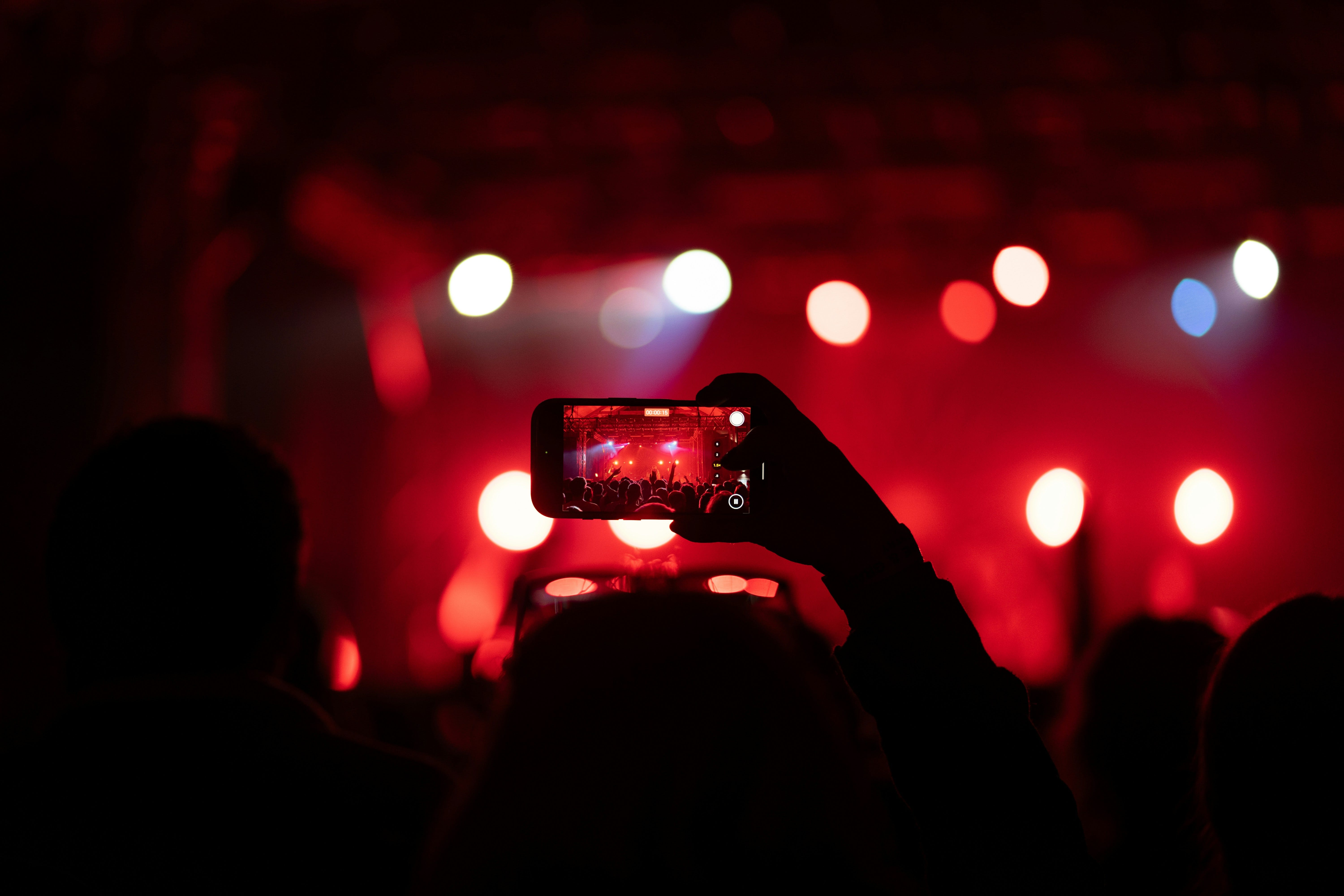
In podcasts decrying the addictive and problematic nature of our screen-facing lives, you will hear people talk about the dopamine hits we get when we reach for our phones. Dopamine is literally a chemical released in your brain that creates physical sensations in your body. If anything, describing phone use in terms of “dopamine hits” is the most embodied way possible to talk about technology. Instead of disembodied stimulation (whatever that might be), we experience what I call experiential overflow. We experience a physical reaction and, at the same time, we are flooded with the experience of someone else’s life (or many people, and I will get to that in a moment.)
Consider NASCAR subreddits where drivers often show up to comment on threads. Disembodiment theorists might argue fans are getting a fake, mediated version of racing instead of the real experience. However, when a driver describes the sensation of taking a turn at 180mph, fans feel it in their nervous systems. The medium creates actual physical responses—readers might tense up, feel their heart rate change, or experience vicarious adrenaline. The screen mediates but doesn’t diminish bodily connection. This is infrastructure for increased intimacy around embodied experience. The digital space (aka mechanical reproduction) enhances rather than replaces physical experience. Second, we are not passive consumers of media. And, I would argue, we do even more than actively shape the meaning and use of technology. Online life is not disembodied. Rather, it is form smashing into form. It is so many millions of forms (other selves, other bodies, other experiences, other lives) pushing unfiltered into our own experience. It is an excess of form, more than a single form (self) can integrate. If genuine intimacy is the unbounded self (or consciousness) recognizing itself through two bounded forms, then online experience is a swarm of disjointed, unintegrated selves trying to cram into your own channel. Each post, each conflict, each outrage, each micro-performance of identity floods the self with incompatible, unrooted forms. We become over-embodied through direct ego to ego, persona to persona, wound to wound lightning bolts without the stabilizing, regulating effect of body, breath, touch, or shared space.
Such was the case with Joseph’s Last Supper Project. Was Joseph a content producer? Or an embodied consumer (literally consuming meals that were offered to him)? Were his followers merely consumers of his posts? Or did their support actively influence his mental state? What about the line between digital and analog, between non-embodied and embodied agency? Joseph posted online and fostered bi-directional interactions between himself and his followers, but he also traveled and sat in people’s homes for shared in-person dinners. Where resonance occurred and lines blurred. And the line between artifice and the highly sensory? This is where we get deeper into confusingly embodied territory. Posting online appears highly dis-embodied, as if your body is behind the screen somehow. In some ways that is true, but the visceral experience is quite embodied.
Our technological experiences are not just highly embodied; they are often incredibly intimate. Anonymity and being behind a screen can sometimes obscure us, but it also frees us. To share more openly. To be more sexual or more deeply vulnerable. It can provoke our outrage more easily, but not necessarily because we are becoming more limited in our exposure. Chris Bail, sociologist and founder of the “Polarization Lab” at Duke, thinks the view that bad information is turning us rotten is backwards. Instead, “the polarizing influence of social media works from the inside out: people project identities into the digital landscape, like sonar pings, and refine their sense of self and of the world according to the response that they get back.” Performers, posters, or influencers reproduce what their audience want to feel expert about, while consumers prefer reproductions that confirm their expertise. Social media generates more than feedback loops. It builds, through these loops, a responsive, affective bonding—the excited tensing of your muscles when you feel your outrage is substantiated, the smile that spreads when you feel your experience validated, or the electricity that floods you head to toe when you feel both seen and wanted by someone on a dating app.
Rather than sonar, though, I think of this more as resonance. As I discuss in my post “The Ache That Makes Us,” resonance is made of moments where you are both affecting the world and being affected by it, where we echolocate against the texture of the world, where its uncontrollability is the responsive dimension in which we feel most human. We make meaning as much with our gut instincts (embodied) as we do cognitively. We use gestures, expressions, often unconsciously, to communicate. Indeed, this is one reason dialogue over text can be problematic for emotional conversations. However, failing to communicate your intended meaning over text does not imply a dissociated response to the medium. You’ve likely experienced, as I have, highly embodied reactions to a particularly loving or hurtful text—your body might shake with delicious nervousness or your heart rate might rise as you experience a painful phrase or as you wait after hitting send, wondering how a partner will react.
In her article wondering if smoking has risen in cultural profile because of our lack of embodied, physical pleasure, writer Christine Emba quotes her colleague, Christine Rosen’s book, The Extinction of Experience: ““It has transformed many human experiences not by banning them, but by making certain kinds of embodied experiences such as face-to-face communication and other unmediated pleasures less and less relevant to daily life.” Heartfelt conversations take place through text messages; we stream church services to our living rooms. This is not a good thing. “Many of these experiences are what, historically, have helped us form and nurture a shared reality as human beings.””
Emba wraps many assumptions into something that appears logical on its face. First of all, why is streaming a church service “not good”? Doesn’t it provide a moving and connected experience to someone homebound? An experience that likely would not otherwise have?
While Emba doesn’t condone smoking as the answer (lung cancer and all), she approves “of giving in to the allure of the analog and of attempts, even if misguided, to live a more embodied life.” Oh Descartes curse, foiled again! Because here it is—that clean split between body experience and mind experiences, never the twain shall meet. What would attempts to live “a more embodied life” look like? I feel more pissed off at my changing body on a daily basis? Is a more embodied life when I have more intense emotional experiences within my body? Or is it when I utilize my body in a relational way, experiencing shared laughter, walking side by side with a friend, or hugging my children? Is a more embodied life just replacing screentime with more hiking? Does this in and of itself improve the quality of my life? We are having the wrong conversation. The question isn’t whether screentime is good or bad, or whether we hide behind screens and present artificial selves and then interact in a more real and natural way without them? Our agency has not vanished. The question is: what is technology amplifying online that is already present offline and further, how are we experiencing technology within our bodies all the time, even when we are offline?
It is not that technology is a poor substitute for in-person communities or experiences. Technological infrastructure has become our intimate infrastructure—this is our brave new world. It is the fundamental architecture of our pleasure, our shame, our desire, our conflict. The question isn’t whether this is good or bad, but rather: what does that mean for our sense of intimacy, embodiment, and selfhood? We keep asking where the authentic self ends and the performed self begins. We keep looking for the line. But what if there is no line—what if we’ve always been plastic?
Chapter 4: What Was I Made For?
The Barbie doll is the epitome of what it means to be plastic. Not only is she quite literally made of plastic, but she sports an ever-present smile and a perfectly proportioned body, and materializes the possibility of endless consummate, artificial futures: Become a doctor! Become an astronaut! Become an Olympian! And wear heels while doing it all.
But Barbie is anything but fake or shallow. Reimagined by Greta Gerwig in the 2023 film of the same name, doll Barbie inevitably falls into the same messiness and conflicting standards that women in the real world face. The inciting factor for her existential crisis is that a young girl in the real world has projected less than perfect thoughts and feelings into her Barbie doll play. Regardless of whether the film reinforces gender stereotypes, is little more than pure nostalgia, or fails to challenge the ‘radicalism’ of the doll’s roll in our cultural heritage, the film, as Alexandra Lange explains, confirms one truism: “Barbie has always existed in the Real World, from her initial challenge to the idea that play should only prepare girls to be mothers, to the cyclical, market-driven attempts to have her represent Olympic prowess, leadership, and STEM skills.” The emphasis on identifying the line between the fake and the authentic is merely the modern version of Descartes’ mind and body problem. Barbie doll play is embodied, felt, integrated, and transferable. Where is the thing doing the thinking and feeling and where is the fleshy part that merely follows its lead? We keep asking this question and it is the wrong one.
Near the end of the movie as Barbie meets her creator, Billie Eilish’s song, “What Was I Made For?” plays as accompaniment for the character’s disillusionment. Before the film was released, Eilish said fans should “get ready to sob” and hoped the song might “change lives.” I quite like Eilish’s music and I was immediately taken when I first heard the song, despite not getting swept up in the Barbie movie fangirl zeal. As with many of her songs, “What Was I Made For?” manages to express longing wrapped in melancholic awareness. “I don’t know how to feel / But I wanna try” Eilish whispers achingly, channeling our fear of exposure, our fear of intimacy, our conflicting desires to be seen and to remain in control. But those lines sound very different when removed from the context of a doll who doesn’t feel but wants to be human and instead listened to, as we do, with the ears of a human who doesn’t know how to feel about the mismatch between outside and inside—the way you can seem to float through life but are really falling, the way you pretend to be in love with the perfect life you’ve built but feel empty inside, even the way you may have been used, “paid for,” which, in one way or another, all of us have been. What is real and what is not? This isn’t a technology or social media or screen issue at all. Indeed, Eilish’s song does break your heart because, like all of us, she wants to try. Not try at becoming human, but try at living in a world long built on surfaces. A world where the look of a good life is supposed to be enough when we all know it is not. Where we all wonder, what was I made for? What am I doing here? The film, the song—they break through whatever wall we thought was there between on-screen and off, between doll play and real life, between artificiality and reality to make commodification become resonance itself. And that is unsettling.
An otherwise poorly written, too dense, and largely manufacturing and chemistry-focused 1996 book called American Plastic made a provocative conclusion: that plastic’s pliancy to our material desires presaged the burgeoning immateriality of the technological world where endless reshaping is not only possible; it is the point. As Mary Warner Marien explained in her Christian Science Monitor review of the book: “Meikle points out that malleability, artificiality, and dissolving boundaries—all qualities of plastic—condense society’s fondness for and its fear of cyberspace.” When the line between artifice and reality dissolves, we’re left asking: What was I made for? Aren’t we all plastic now?
In 2012, a Dutch girl named Merthe, created a Facebook event in order to invite friends to her sixteenth birthday celebration. She made the event public and, within a day, it had been reshared with over 3,000 people indicating they would be coming. Overnight, that number bloomed to 17,000. At that point, Merthe decided she needed to speak with her parents. After deleting her event, they thought the problem was solved, but having been seen by so many and having generated significant excitement, the event was replicated by external actors on Facebook and other social media sites. The town council organized to close off the street, local police were called in, even local entrepreneurs were set into motion organizing after-parties nearby.
Perhaps, most interestingly—even more interesting than the way the event was circulating online through memes and simultaneously activating genuine anxiety and reactive organizing in the town of Haren, crossing back and forth over the seeming boundary between the online and the real—is the discussion amongst those who wanted to attend. They had no desire to celebrate Merthe; the overwhelming majority of them didn’t know her at all. What they did express repeatedly was a desire to reproduce the party scene in a movie called Project X. As one partygoer said of the connection: “We’re gonna do this real movie in real life.”
The film follows a high schooler named Thomas and his two close friends, Costa and Dax. When Thomas’ parents go away for the weekend, Costa and Dax spread word of an epic party to be hosted at Thomas’ house. Closely paralleling Merthe’s event, people arrive en masse the night of the party, and things eventually get out of control with rioting and property damage, cars set on fire and kids high on ecstasy having sex. The artificial fantasy preceded the glitch of Merthe’s party becoming public, the desire for replication of something fictional preceded the actual replication of something potentially real, and finally, the real Haren event simulated the film in surprisingly close similitude. Benjamin’s aura was only actualized once the fictional, screenified version of a desire became material. What was I made for? To make plastic into flesh. To turn the celluloid dream into reality. To inhabit the self I imagined after it was imagined for me, to rotate screen selves into myself and back out again in a technological digestion that gives form to my desires, my longings, even my needs, and then cleanly pushes a more condensed form back out into the world. Self, other, experience are solidified in the process. It would be reassuring if we weren’t so heavy with form, overembodied with the tag-along selves we’ve swallowed—so full of other people’s hunger that hunger becomes hard to name.
It’s quite common to see the word mediate used when someone theorizes about technology. The screen mediates reality. We are mediated through social media. Technology shapes our perceptions and structures the possibilities for future action. While it is true that a landscape viewed through a screen differs from being in that landscape, and that wearing a smartwatch translates bodily functions into data, this framework falls short—especially when it comes to human-to-human experience.
Mediation suggests that something stands between us and the world, filtering or transforming what reaches us. It positions us as users and technology as a tool—something that may distort or reshape experience, but ultimately remains at a distance from experience itself.
And yet, this is not how technology feels. It does not simply come between us and the world. It brings more of the world—and more of each other—into us than we can metabolize. What we are experiencing is proximity without limit. Mediation describes transformation of perception. It does not account for transformation of the body.
A couple months ago, I read a post from a Subtack I follow called The Noösphere. In it, writer Katie Jagielnicka explained how her essays were being plagiarized and posted in a new substack that was very rapidly gaining a substantial audience. In her words, the theft caused self-doubt (“Had I hallucinated writing this piece altogether?”), then rage (“I got angry then angrier and angrier”), and finally intense physical sensations such as increased blood pressure and heart rate. And these were only her immediate reactions. The violation was content-oriented, but for Katie, it was visceral. Her voice, her rhythms, her very thinking—done while sitting with her cats or taking long walks—was being worn by another like a mask. But it was more than a loss, it was an overwhelm. Another self had crowded into her own and then hijacked her very skin. The self as transmissible message; the boundary-dissolving fluidity of cyberspace becoming, as Meikle once suggested, our intimacy and our fear realized—our primary human feelings the very infrastructure of that space, our system—the system—flooded with more bodies, selves, and feelings than we can hold onto.
Chapter 5: The Vast Unreachable
I had never heard of gooning before Sean Illing interviewed journalist Daniel Kolitz on his podcast The Gray Area. Kolitz has just published a piece in Harper’s called “The Goon Squad” after spending months immersed in the gooning universe. As described by Kolitz, gooning is:
a new kind of masturbation. More precisely, a new kind of masturbation at the heart of an internet-based, pornography-obsessed, Gen Z–dominated subculture every bit as defined and vibrant as the hippies or punks in their prime. The act itself resembles “edging”—repeatedly bringing oneself to the point of climax without actually climaxing. But gooning is more goal-oriented and more communal. The gooner goons to reach the “goonstate”: a supposed zone of total ego death or bliss that some liken to advanced meditation, the attainment of which compels them to masturbate for hours, or even days, at a time.
The excess of pornographic material available on the internet is, in Kolitz’s words, “staggering.” Kids are exposed not just to porn, but to extremely hard-core stuff, as early as fourth grade. “There is simply too much to masturbate to,” writes Kolitz. Stimulation is everywhere—in the abundance of porn, in the adrenaline hits of tech itself, in the millions of selves whose inner lives, raw feelings, and physical experiences we are wrapped into every day. Stimulation is not enough anymore. Though gooning may seem extreme, so go the rest of us—overstimulation is now the point. As one gooner professed of the goonstate: “it’s like being high while high.”
Gooning is overembodiment in hyper-drive. It is Groundhog Day Phil’s simulations of self, but reproduced, pushed past reproduction into infusion—auras liquefied and mainlined. It is being high while high, embodying self while overembodied, feeling intensity to the point where intensity itself loses all force. And just as Phil feels like the only meaning left is meaninglessness, the significance of the GoonVerse is its embrace of a nihilistic posture where the point
… is this: kill yourself. Not literally, but spiritually. Where mainstream porn invites the straight-male viewer to imagine himself as the man onscreen, gooner porn constantly reminds viewers that they are alone, that they are masturbating to porn because no one would ever deign to sleep with them. “Ruin your mind,” “go deeper,” “give up on life”: these are goon porn’s basic slogans, the movement’s rallying cries. Even NoodleDude—as tame a practitioner as one can find in this space, and whose productions a non-gooner might conceivably find, if not arousing, at least not actively terrifying—has adopted this attitude. In the introduction to his recent video “Follow Me,” a woman’s voice whispers ominously, or perhaps sexily, that “over two hundred ten million people worldwide are addicted to social media. You are one of those people. Keep scrolling. Further. Deeper. Forever. And ever. Submit. To porn. You can’t. Turn back.”
The GoonVerse is not disconnected or filled with loneliness either; it is a dynamic community. But it is a community built on stimulation where that very stimulation no longer arouses, excites or increases activity. Instead it becomes the numbing agent of a space without boundaries, of a space that is not thinned, but leaking out with too much form, too much tethering, too much embodiment, too much for one self to contain. In these malleable spaces where we too are plastic, we dissolve not into emptiness, but saturation. When form multiplies beyond what a single self can hold, experience no longer deepens. It collapses. And more experience no longer means feeling more alive. It means that aliveness now exists in a saturation so extreme, the only addition left is subtraction.
Artist Andy Goldsworthy has been creating site-specific works for over fifty years. Near his home in Scotland, he is now planning a posthumous creation called “Gravestones.” When graves are dug in rocky soil, the stones unearthed are tossed as useless remnants into piles, amassing in corners of cemeteries. That which holds together the ground on which we walk becomes refuse in the process of making space for the self who walked upon it. And this transfer seemed to Goldsworthy representative of something we don’t want to be reminded of…or perhaps we do. However, he saw this supposed excess differently—not as irritating objects getting in our way, but as signifying “this connection to the exchange between the body and the earth, and the reminder of where we end up.”
Journalist Rebecca Mead was able to witness a provisional installation of what will ultimately be the completed outdoor work in an Edinburgh show where “Goldsworthy had filled a gallery, wall to wall, with a sea of stones, ranging from pebbles to small boulders. When you entered the space, you had only a narrow strip of exposed floor to stand on—placing you on the boundary of the vast unreachable.”
The vast unreachable. The phrase struck me…hard. Have our online spaces—our social media, our dating apps, our bits and pieces of self and other puzzled apart and then back together, our fluid nature—become entirely too reachable? Have we lost touch not with reality, but with the “vast unreachable”?
As the internet dawned and cyberspace became a place we didn’t just visit, but inhabited, imbibed, swallowed and choked up repeatedly, we were right to be concerned about malleability, about being too plastic—not because it blurred the line between reality and artifice or between truth and fiction: those lines have never been clear. But because it allows us to forget that we are not pure fluid, but form, always embodied, forever mortal and thus achingly drawn towards what really is on the other side of the screen—the vast unreachable. The self is not an illusion, but a message—and a messenger— through which we reach for the unreachable. A place we can’t seem to touch anymore. Because we can’t see it. No, because we forgot it was there.
I am very porous to the world. I feel it acutely. Yet I’ve found recently I like to take walks while listening to intensely moody music, layering feeling onto feeling, adding intensity to what is already there. Why? Why are we getting high while already high? Stimulating ourselves beyond stimulation itself? Overembodiment primes us to keep seeking saturation even when we are already full.
The stones in Goldsworthy’s planned artwork are not distant. They are right there beside you—tangible, immediate, filling the room wall to wall. And yet, they are always beyond—reminders of the geological processes that formed them, of the way we cast away meaning to make space for death, of how we are constantly displacing solid things with each choice, each breath, even our last one.
The ephemerality of Goldsworthy’s art may exemplify change, but not change as we commonly understand it—modifying, exchanging, becoming. His change is not experienced through movement, but is witnessed by standing still. When you stand still, you notice the world around you moving—babies being born, loved ones dying, the passing traffic that you thought was taking you somewhere. We have lost touch with something but it’s not reality; it is the vast distance beyond what is pressed so closely against our faces and bodies. It’s not connection, but the space that returns reaching to being an opening rather than a grasping. We don’t need to touch grass. We need to reach beyond ourselves in a space where there is enough distance to create the resonance that confirms our form. And expands it.